Showing posts with label Propagation. Show all posts

Monday, November 29, 2010

The Chrysanthemum Experiment - Results


This year I've been experimenting with my chrysanthemums. I have some little yellow ones which I've been growing for years now. Every year I leave the old plants till early spring, and then take cuttings from the new growth. That's what all the books tell you to do, saying that the old plants will never produce such good blooms in subsequent years. Was it true? This year I decided to try it out.


If you click here, you'll find the posts I wrote in March (when I took the cuttings) and May (when they'd taken and it was time to "stop" all them in order to convince them to put out side shoots). But I've reproduced the photos to show you the main stages. I took cuttings, but didn't throw the old plants away. Instead I planted the cuttings in the same container, in between the older ones.


Why? well firstly to fill the gaps left by a couple that had died over the winter. But also to ensure that the soil, water, light and fertiliser conditions were identical for both sets of plants. As any primary school child will tell you, an experiment is only a "fair test" if one variable, and one only had been changed. In this case the variable was old plants vs cuttings. Everything else was identical.

Back in May, the new plants looked pretty puny in comparison with the old. But by the time autumn arrived, I could only remember which was which by going back to the spring photos to check.


By October they were covered in buds. Whichever won, it was going to be a good year. And, when the buds opened, it was immediately clear that...


... there was no difference at all. Both sets of plants are full of flowers, the flowers are all of the same size, and I can see no difference of any kind.

So will I be taking cuttings next year? Yes, certainly. But to increase the number of plants I have, not to replace the old ones. From now on, my chrysanths can go on for as long as they feel like it...

Saturday, August 28, 2010

Growing Avocados


This summer, I've been growing avocados. Not a great challenge - they're dead easy. The question is, whether they're worth it.

Avocados are a rain forest plant. They've evolved to survive as seedlings under a canopy of leaves which blocks out the light. How do they manage? By putting all their energy in to growing as tall as possible as quickly as possible to reach the light. Result - a tall, spindly plant with a long thin stem and a cluster of large leaves at the top. Not desperately attractive as a houseplant or balcony plant. I've had them before and, quite honestly, they ended up looking dreadful.

But I thought I'd see that I'd try again and see if I could keep them lower and bushier. How ? First of all by making sure they have plenty of light, so they don't feel the need to become ganglier than necessary. But I've started off two pots, and they're each going to get slightly different treatment.

Pot number one (top photo) contains seeds that were started off at different times - the tallest went in at the beginning of the summer, the last one yesterday. Starting from now with the two tallest, I shall pinch out the growing tips to encourage them to spread. And I shall start pinching when each one is slightly smaller than the one ahead of it. That way I'm hoping to get bushy growth at different levels - the lower ones masking the spindly trunks of those which are taller. Well, that's the theory...


Pot number two has three seeds. They've just gone in, and as they grow I shall braid the trunks just as you often see done with Ficus benjamin. I'm hoping they'll eventually fuse together (as Ficus benjamin does). But in any case, the effect should be less height (because each trunk has been wound around the others), an apparently thicker "single" central trunk, and a mass of leaves on top. Again, that's the theory. While I can find plenty of advice on growing avocados on the web, and also plenty of advice on braiding other trees, no-one seems to have thought of putting the two together. Or perhaps they have and it just doesn't work. We shall see ...

If you want to grow them, use a fresh seed - plant it almost as soon as you eat the fruit. Let the brown outer coat dry and peel it off. Then just pop the seed into some fertile soil, broad side down and with its nose just showing above the soil level. Keep the seeds moist (not soggy) and wait. Forget all that stuff about sticking toothpicks into them and suspending them over water - would you like toothpicks pushed into your tenderer parts? Just plant them in the pots and keep them warm - I've seen around 20°C (70°F) recommended, but mine have zoomed up this year in temps of around 27°-35°C (77°-90°F). They are rainforest plants, after all.

Then you need to be be patient. It will seem for the first month or so that nothing's happening. Not true - they're developing long thick roots. This is one that I pulled up yesterday because after waiting for weeks and just seeing it get drier and harder, I did decide it had died. But you can see that a long root had already formed before it gave up.


So wait. And then, sometime in the second month, you'll see that the top of the seed has split, and very soon the stem and the first leaves will be poking through. And growing at a rate of knots. Keep them moist (but again, never waterlogged) and feed regularly with a fertiliser containing balanced nitrogen, phosphorus and potassium and also zinc.


Size can also be controlled by trimming the roots annually and keeping them in a small pot, but the size of the leaves means that they're not really suitable for bonsai treatment. Huge leaves on a tiny tree would just look daft. There are dwarf varieties, but I don't think you're likely to find them in your local supermarket.

Avocados are not hardy. Once the temperature drops below 7°C (45°F) they need to come inside - which may become a problem if they do get really big. Cold may also kill the seeds too, so don't store the fruit in the fridge before you plant.

But then, you wouldn't be silly enough to put fruit in the fridge and destroy all the vitamins anyway, would you? And avocado has lots - it contains vitamins A, some of the B group, C and E and is also full of minerals : it has three times more potassium than a banana, weight for weight, as well as calcium, iron, magnesium and phosphorus. And despite it's high fat content, it's mostly mono-unsaturated fats and is low in cholesterol. (1) What more do you want?

Sadly, though, the only avocados you get to eat as a result of growing them may be the ones you buy in order to get the seeds. Sources differ as to how long it takes a tree grown from seed to bear fruit - around ten years seems to be the average estimate (2), but some websites put it at as long as twenty. Don't think our local supermarket need feel too threatened ...

References

1. The California Avocado Commission
2. Flower and Garden Tips


Thursday, April 29, 2010

Potting on ...


Back at the beginning of March I wrote about pricking out my wallflower seedlings and potting them up as plug plants. This is what they looked like then ...


After about a month it was clear that they needed potting on. So I duly transferred them. In theory they should all have gone into 3" pots, but there were over sixty of them, and sixty 3" pots would have taken up more space on the balcony than I had to spare. So about twenty of them went into their own pots while the others went straight into the final containers where they'll grow till they flower next spring.

Would it make a difference? All the gardening books and experts are stern about it : never give a young plant more space than it needs at that moment, or it will just put down roots and "forget" to develop above ground.

But that wasn't the only one of gardening's ten commandments that I managed to break. When I'd transferred almost all of them, I ran out of fresh soil. I wanted to finish, so I just used a container that still had last year's soil in it. How much difference would that make?

Well, here are the results. First the container with fresh soil...


Happy, healthy little plants, coming on well in comparison to their clearly deprived friends in the container with old soil. Most of them haven't made it at all, while the rest remain small and weedy. The self seeded sunflower in there with them doesn't look too happy either ...


But then there are the plants in the 3" pots. Bear in mind that all of these plants were approximately the same size when I moved them a month or so ago.


The "potted" plants are more than twice the size even of those in the first container.

Will it make a difference to the display next year? The jury's going to have to stay out till next April before we can get a verdict on that one. The ones in the container with the poor soil are clearly going to need some tender loving care. Transplanting to new soil is the obvious answer, but as I've got so many I thought I'd try an experiment and see to what extent I can "remediate" with fertiliser. When you garden on a balcony in the middle of a city, disposing of old soil is a huge headache, and if you can re-use it, it's one less problem to worry about. We'll see ...

As for the difference between those in the container with good soil and those in the pots, I suspect that there'll be time for things to even out. Or there's even the possibility that superior root development will give the container plants the edge in the long run. Again, we'll see.

One thing is clear however. Had these been annuals rather than biennials, it would have made a huge difference - and meant a much earlier flowering period. From now on, any annuals that I grow from seed will definitely get "potted".

Meanwhile, the wallflowers from last year have been giving a wonderful display. Next year's plants will be a mix of the same browny-yellow ones as are here, plus a new red variety. I'm in two minds about it - for me, wallflowers are brown and yellow. But yet again, we'll see...


Wednesday, June 06, 2007

Not So Loony Gardening ?

Do you garden by the moon? I get a monthly gardening magazine which gives a guide to the phases of the moon and advises on what should be done in the garden at each stage - from sowing to pruning. But I have to admit that I rarely follow it. My gardening schedule tends to depend much more on what I've got time for each week than what I think really ought to be done. Occasionally I do follow the guide, but always forget to label the plants so that I can compare them with others which were sown (or whatever) at the "wrong" time, so that I can see if it makes any difference.

But I was interested to see an article on the BBC site from back in May explaining how 600 volunteers were going to be working on a National Trust site planting annuals in sync with the moon and also explaining why it's supposed to make a difference. The article explains :


The Biodynamic Sowing and Planting Calendar predicts how plant sap and water table levels will be impacted on by the moon's gravity, and identifies optimum times for sowing certain types of plants.
According to the calendar, the moon's gravity produces varying conditions for planting, and is much more specific about the exact time when a flower, root or plant should be placed in the soil than conventional planting schedules.


Too late now for my summer planting, as everything's in. But perhaps it's a project for the autumn. Watch this space ...


Acknowledgement
Thanks to gonzalo_ar for making the photo of the moon available under Creative Commons Licence via the flickr site

Thursday, April 26, 2007

On Seeds

In my kitchen I have an old shoe box. It’s full of seeds – seeds which I’ve collected from my own plants or elsewhere, commercially bought seeds, even a few which I appropriated from the hamster’s food to see what would come up …

I thought I had a good collection, but I hadn’t realised
what is going on at Kew Gardens. The Millennium Seed Bank has just reached its one billionth seed. The Seed Bank is an attempt to counter the loss of biodiversity which is currently happening on the planet due to climate change, deforestation and so on, by saving seeds which can then be used in the future. They’ve already got 18,000 species, some of which are now extinct in the wild, and the aim is to get to 25% of the world’s 300,000 species by 2020.

They presumably have a bit more storage space than a shoe box.

Tuesday, September 26, 2006

Reusing and Recycling

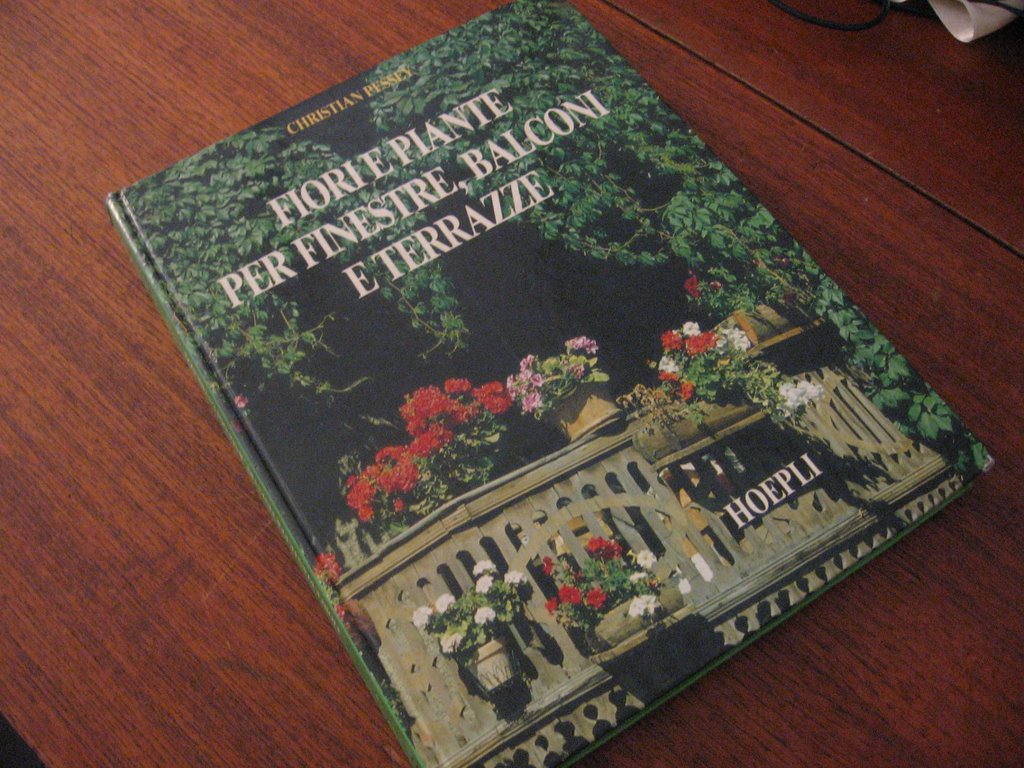
Our local library has just closed for three months, for building renovation work, so I took advantage of the fact that we were able to take out more books than usual for a longer period and got several large reference books – the sort that you want to dip into a bit at a time, rather than read straight through. One of the books I took out was by Christian Pessey. The original was in French, but an English translation of the Italian title would be Flowers and Plants for Windows, Balconies and Terraces. Reading it got me thinking about recycling.

In Milan, household waste has to be separated – paper, glass, plastic and aluminium all go into separate containers from “wet” waste, and are recycled. Which would seem great for the environment. But even recycling has its critics – the amount of energy used in transporting and reprocessing the waste creates pollution, as may the chemicals involved in the reprocessing itself. For the pros and cons, click
here and here.

Another site, and I’m afraid I’ve lost the link, suggested that a balanced approach was to follow the Five Rs : Reduce the amount of plastic etc used; Reuse things wherever possible; Recycle things which really have to be thrown away; Reject items using excessive and unnecessary packaging; and React – let manufacturers and shop-owners etc know how you feel.

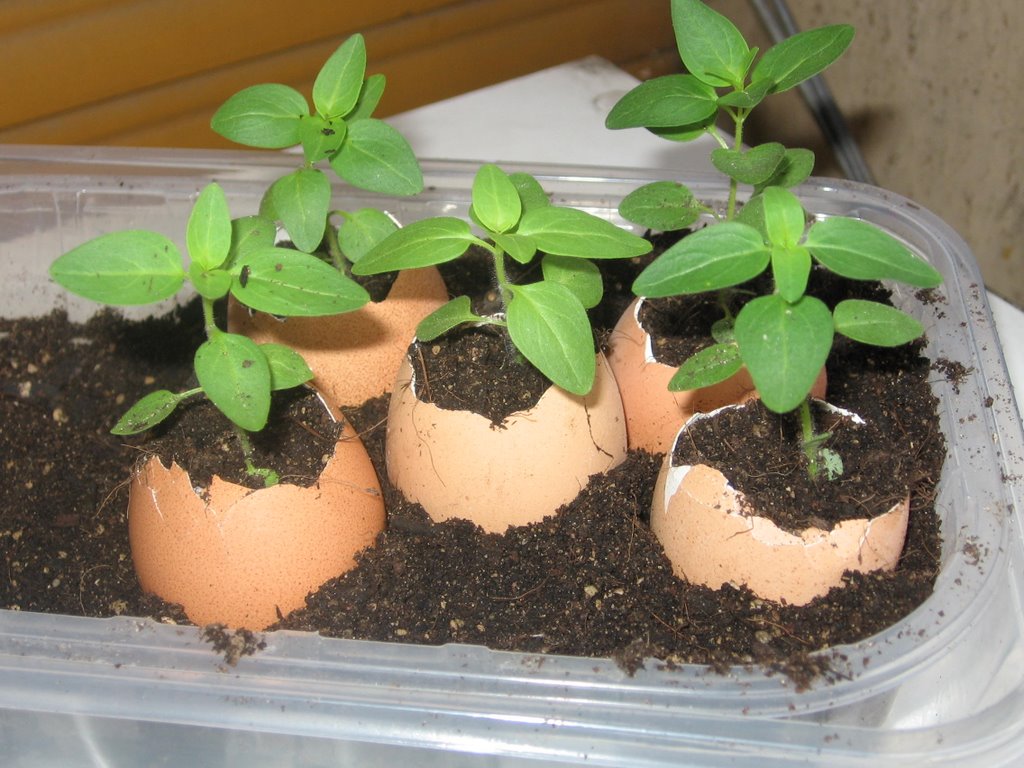
Plessey’s book was interesting from the re-use point of view. Although he didn’t explicitly mention environmental issues, he suggested various ways that plastic packaging could be used in gardening rather than buying new stuff. Some of his ideas were not new – for example, using yoghurt pots for seedlings instead of buying more plastic pots (though even there it had never occurred to me to use a match or red hot needle to make the drainage holes – I tried it out with a candle flame and it was much easier than my usual clumsy attempts with a skewer). But others, though simple, I’d never thought of – for example cutting off plastic bottle bottoms to make mini-cloches to fit over pots with cuttings or seedlings.


But my favourite idea was that of using the shells of boiled eggs (with a hole pierced in the bottom for drainage) instead of small plastic or peat pots. (For reasons for avoiding peat click here ). They have the same advantage as peat pots in that the whole “container” can be transferred to the final planting position, without disturbing the roots of the young plant, and the roots will simply grow through the shell, acquiring nutrients on the way. I presume this means a lot of calcium, so it’s probably to be avoided for lime-hating plants, but it would be great for things like zinnias which love lime.

I’m afraid I’ve gone a bit overboard on this one though and will have to calm down. I suspect my family are likely to revolt if they see another egg within the next fortnight…

Wednesday, September 13, 2006

IntraGalactic Plant Exchange

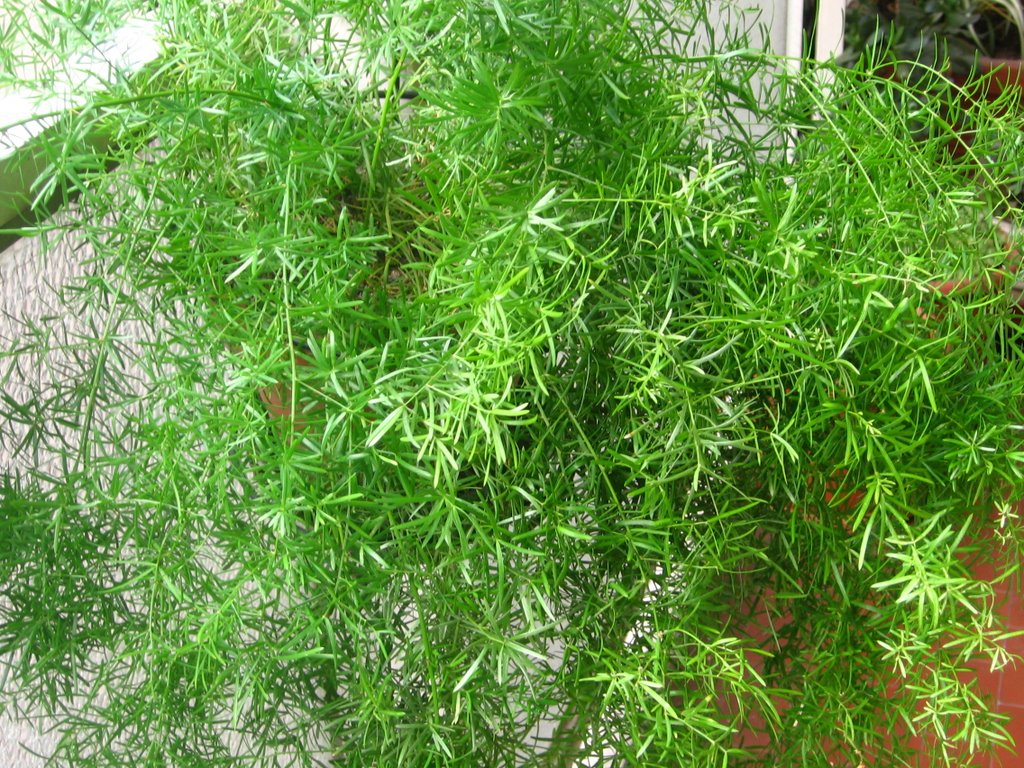
The plant in the photo is my wild asparagus. I found it growing in one of the containers a few years ago, and at first didn’t know what it was. So I stuck it in a pot to see what happened.

At first – absolutely nothing. For the first couple of years, the original four or five three-inch spikes just sat there looking boring and taking up space, so that last year I was on the point of throwing it out. And then it suddenly exploded and grew at a rate of knots. It’s still not the most interesting of plants, but I love the bright green of the leaves, and it’s very useful for providing foliage in vases of cut flowers.

Where did it come from? It must have just drifted in on the wind. Plants do seem to be fairly good at finding themselves new homes. Watching Star Trek : Deep Space Nine the other night I was amazed to see that Bromeliads are well established on the planet Bajor, at least 50 light years from Earth. In fact, one of the characters Vedek Bareil explained that he had studied to be a gardener, and that Bromeliads were his passion. Now how did they get there? I can take teletransportation and holodecks without blinking, but the idea that identical vegetation evolved on two such distant planets is stretching it too far. Seeds thrown into space after an asteroid impact and left to boldly go where no plant has gone before ? Unlikely. 50 light years is a long way without Warp Drive …

No, as any self-respecting Vulcan would tell you, such solutions are just illogical. I suspect that it’s the result of an Interplanetary Seed Sharing scheme, or something of the sort. If you were visiting Vulcan, Bajor or somewhere, wouldn’t you want to bring a few samples back? So next time someone knocks on your door and asks if they could take some seeds from your Schizanthus or cuttings from your Chrysanthemums, just look for the tell-tale signs. Pointy ears, odd ridges on the nose or forehead, attractive blotchy patterning around the hairline – you could be taking part in Intra-Galactic Plant Exchange.
Related Posts with Thumbnails