Wednesday, August 30, 2006

Other People's Balconies

While I was on holiday, I spent a lot of time wandering around and looking at other people’s balconies, in search of ideas. We were in a small seaside town in the north east of Italy (head for Venice and keep going east towards Slovenia), an ex fishing village where tourism is now the main industry. There were loads of hotels and restaurants with container plants growing out front on their terraces, as well as lots of private houses and apartment blocks. These hibiscus, and lots more like them, were waiting for me as I left our hotel every morning.

The one plant you couldn’t miss was Dipladenia. It was everywhere and clearly flourishing in the hot, sunny conditions. I love it. I’m never sure whether Dipladenia and Mandevilla are the same plant or different. Some books seem to list them together, others separately. I always think of them as different. I really wanted to get a Dipladenia this year, but couldn’t find it in my local garden centre and got a Mandevilla instead (see Aug 6).


As well as looking at individual plants though, I was also looking at colour schemes, with my Aug 9 post in mind. A lot of people had gone for one colour and one plant only. They often looked great, but I always had the feeling that there was a “businessperson” behind them, more interested in making his or her premises look attractive than really having any real interest in gardening.


The same was true of some of the bi-coloured arrangements too, though I have to admit that the mass of purple and white surfinias on all the balconies of this hotel was pretty impressive.


In general though, my favourites were the less obvious combinations. This pairing of blue plumbago and red begonias was nice, and I fell in love with the violet flowers and bi-coloured leaves of this hebe paired with the deep, deep red of these pelargoniums.


But of all the combinations, this little corner in the old part of the town was the one that really won me over. There’s nothing unusual about either the colour scheme or the plants, but they just looked so happy and full of life that I couldn’t resist them. They’re now on my computer desktop, and greet me every day as I struggle, very reluctantly, to get back to work ….


Sunday, August 27, 2006

Before and After

The one thing you can’t do if you’ve got a balcony garden is go away and leave it unattended in summer, and expect it to look the same when you get back. Even a short holiday of ten days, like I’ve just had, is asking for trouble. I have the same problem every year – first of all I don’t know anyone here who really enjoys gardening, and would take it on for me, and – even if I did – as everyone goes on holiday at more or less the same time in Italy, they’d probably be away too.

So I have to rely on a very uninterested plant-sitter to water for me, and just forget about the possibilities of pests and diseases. And I know what I will find when I get back – pots saturated and standing in three inches of water, and plants either drowned completely or so weakened that they’re easy targets for anything that wants to eat them. I swear every year that I’m going to invest in an automatic watering system and next year I really must get round to it ….

This year, as I was only away for a relatively short time, it wasn’t too bad. The worst hit were the marigolds. If you look back to August 9 you can see what they were like when I left. This is what I came back to ….

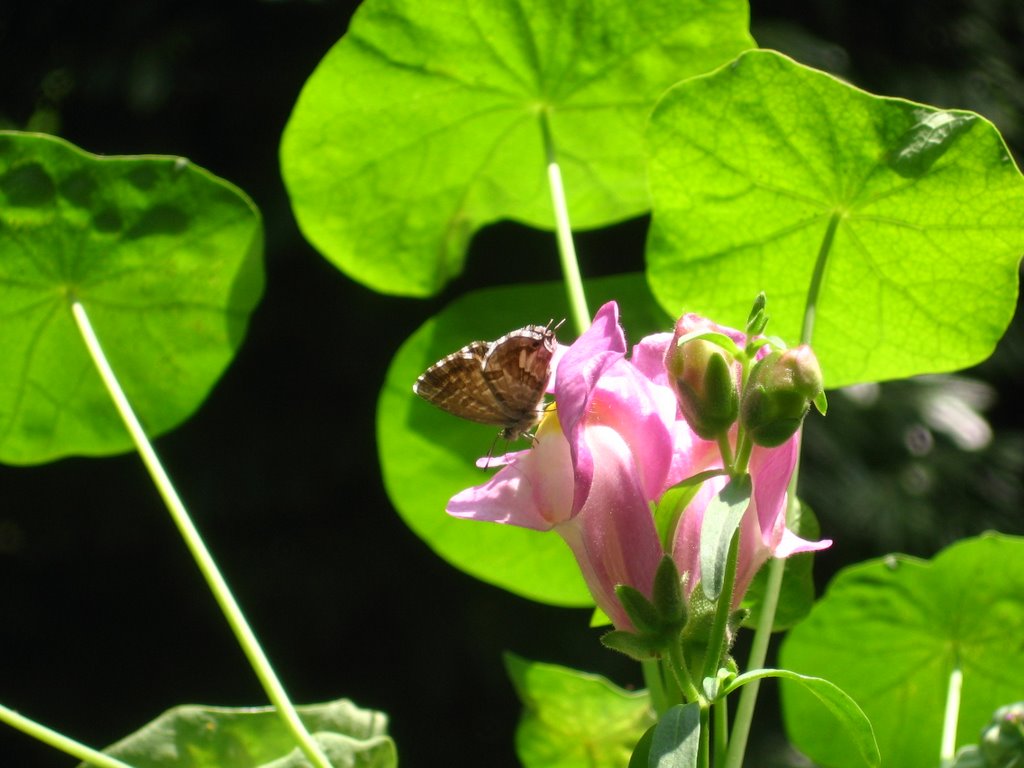
The Revenge of the Red Spider Mite. Obviously I’ve had to yank out and throw away the ones that were this bad, but I’m hoping that about 50% will make it. I’ve cut off the worst-affected lower parts and will spray the rest. But this morning there were so many butterflies on the balcony that I couldn’t. Here’s one on one of the antirrhinums. Does anyone know what type it is? Its caterpillars are small and green.

And a lot of butterflies obviously means a lot of caterpillars. I’ve lost several plants with others looking decidedly tattered, but nothing that isn’t duplicated elsewhere on the balcony. I shall do a caterpillar hunt later and move them out of harm's way before I start to spray.

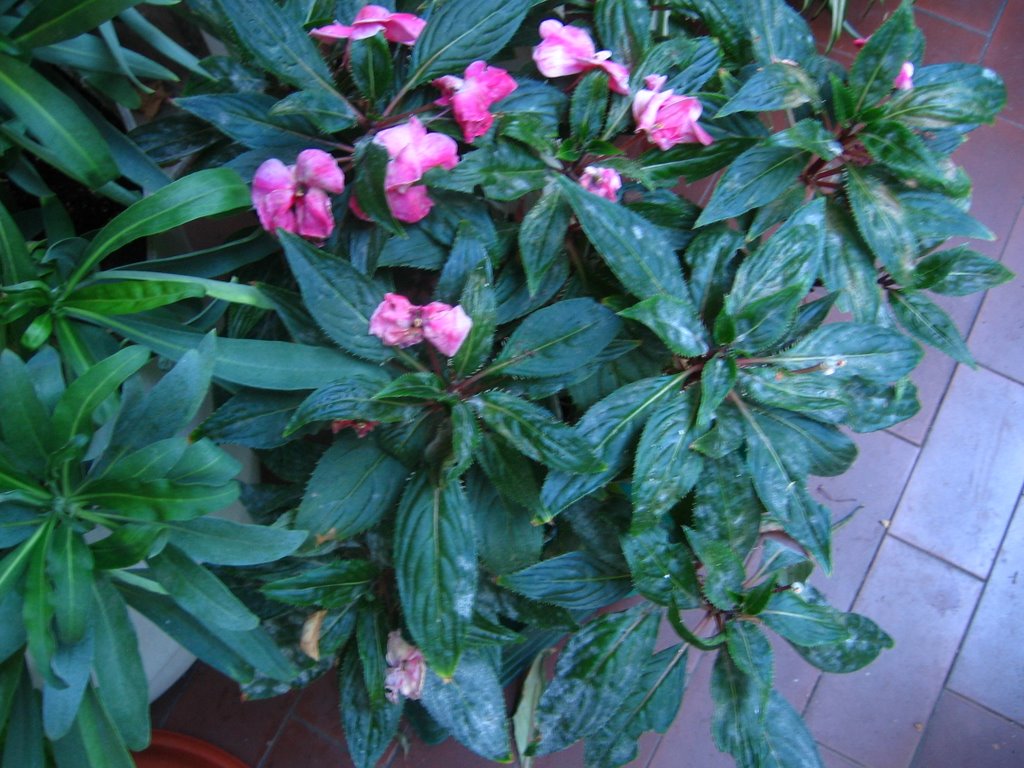
Another casualty has been my New Guinea Impatiens. The photo on the right was taken shortly before the holiday ….
...and this is what it looked like yesterday.
It’s been hit by powdery mildew. I washed as much of it off as possible by spraying with milk and then wiping the leaves clean. And then resprayed the whole plant. We shall see. If it doesn’t work I may have to resort to a chemical fungicide.

Before I left, I’d sprayed one of my begonias with milk to try and ward off rust. Unfortunately I can’t tell you if it worked as it’s succumbed to over-enthusiastic watering and the stems have rotted away. I’m sure I’ll get another chance to try it out before long though.

I’ve also lost a number of seedlings through damping off, though the ones which were already well established are doing well. And talking of seedlings, the ones in the photo in the last post were, in the centre antirrhinum, and then going from one o’clock in a clockwise direction : foxglove, lychnis, hollyhock, bellis, forget-me-not, honesty and stock.

The final plant, at twelve o’clock, is the mystery plant. I suspect it’s a type of erigeron, though it’s not like the ones you normally see in gardening books. I got the seeds from a plant growing in a rockery garden. It produces a thick, almost woody stem and trails along the ground or over the rocks. And produces a profusion of daisy type flowers with pink petals and a large yellow centre. It was in a position that got very little rain, so obviously likes dry conditions. You couldn’t see it very well in the last picture so here’s another one. Any ideas??

Sunday, August 13, 2006

Mirabilis Jalapa


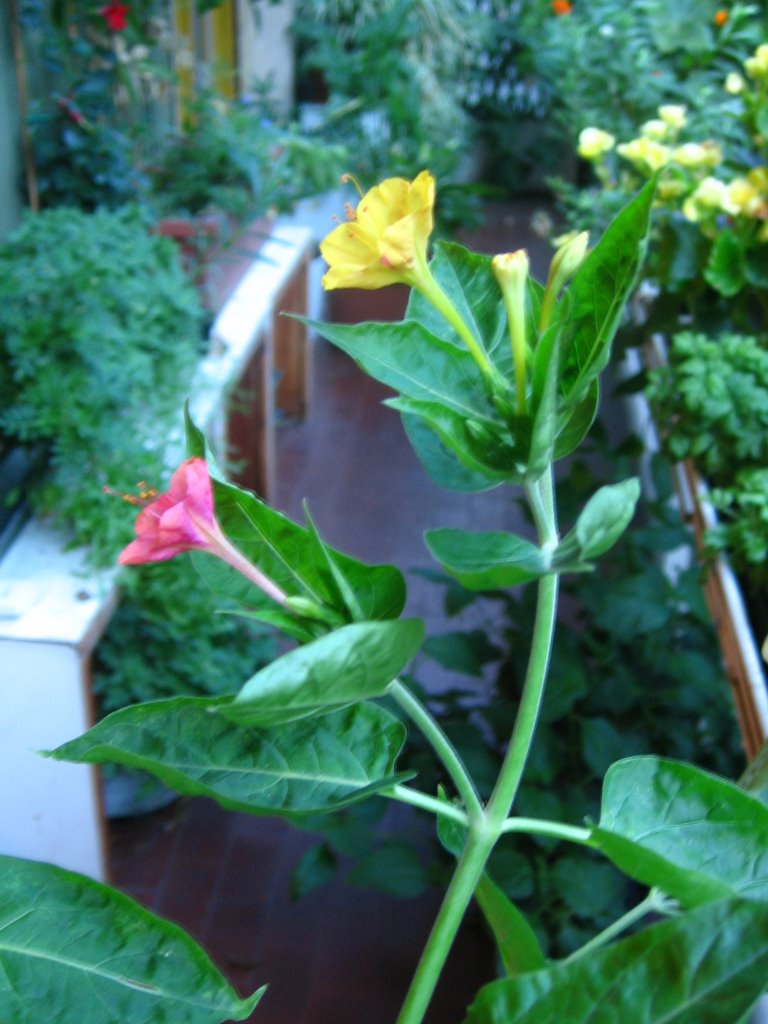
I’ve grown Mirabilis jalapa (Beauty of the Night or The 4 o’clock Flower) for the first time this year and it’s recently started flowering. I’ve been a bit disappointed so far as it’s a tall plant with quite small flowers, and they’ve been coming out one at a time. It only blooms in the evening, and the flowers only last one night, so one or two per evening are not very impressive. However, yesterday it did this – different coloured flowers on the same plant! I checked and it’s quite common with this type of plant, but I hadn’t realised it was possible – does anyone know of any other flower which does the same?

I’ve got six plants all together, and they’re now a mass of buds, so I guess they’ll come out in force in the next couple of weeks – a pity, as I’ll be on holiday and will miss them. The holiday also means I won’t be blogging for a while, so I thought I’d leave you with this … the photo below is a selection of some of the seedlings I’m bringing on at the moment. Can you recognise them? I have to admit I have a sneaky reason for asking – there’s one which I don’t know the name of, though I know what the plant and flowers eventually look like. If anyone can identify it, I’ll be really pleased.

Friday, August 11, 2006

Bulgy Bottoms


I’ve been having fun growing melons this year. They’re one of those plants which seem to shoot out of the ground so fast you can almost see them growing, and the foliage and flowers are both so nice that they blend in well with the other stuff on the balcony. I put them in a bit late and I’m not sure if the fruit will have time to grow and ripen – depends a bit how warm September is, but this year was really just an experiment to see how well they do in containers. It seems to have worked, so now of course I wish I’d started earlier. But I’ll get myself better organised next year.

I had a bit of a problem at first deciding which were the male and which the female flowers. There were some very clear diagrams in one of my gardening books – the ones with the bulgy bottoms were female. But when the flowers started coming through they all looked the same to me – no bulgy bottoms at all.

After about a week muttering about misleading gardening books, I finally found a couple of females. And sure enough, they looked just like the diagrams. I’ve checked since, and apparently the male flowers usually come through first. I suppose it guarantees that the pollen is available when the females finally arrive. We do get a few bees on the balcony, but I raided my son’s paintbrushes and hand-pollinated just in case, and now have three or four baby melons developing.

Male flower .....

.... and female flower

Wednesday, August 09, 2006

On Colour Schemes


I’m not very good at colour schemes. Apart from the fact that I must have been standing out of line when colour sense was handed out, half the time I’m not sure what colour my plants are going to come up until they actually bloom – by which time they’re in the containers and it’s too late. One reason is that I tend to collect seeds from my own or other people’s plants, and they don’t necessarily come up the same colour as the mother plant. Sometimes they’re even nicer, but it makes planning colour combinations a bit difficult.

I also admit to being hideously disorganised. Although I label my seed packets and trays, the labels often get mixed up and I’m lucky if the tray ends up with the same plant as I’m expecting, let alone the same colour. The little daisy like flowers in the photo above (does anyone know exactly what they are?) came from a tray labelled Oriental Poppies. Goodness knows how they got there, because I don’t remember planting anything even remotely similar. As for what happened to the oriental poppies, your guess is as good as mine.

And then there’s the space problem again. A book I once read on balcony gardening advised sternly that no balcony should ever contain more than three harmonious colours. It’s right of course – there are some stupendous colour schemed balconies around here and they look great. I’ve toyed for a couple of years with the idea of a blue white and silver balcony – based on some wonderful flower beds I saw at Chatsworth House about ten years ago. But when it comes to actually doing it, it always means giving up the idea of growing too many other things.

I’ve done a bit better than usual this year. I’m quite pleased with the yellow and gold combination in the photo above (surfinia, marigolds and the mystery daisies), and I love the contrast between the colour of this purply pink petunia and the rich blue of the plumbago. I can’t take any credit for it though – I thought the petunia was going to be white. Other results haven't been quite so good. The supposedly white antirhinnum which turned out to be a delicate shade of violet was beautiful - but it didn't go with the salmon pink pelargonium at all ...


Sunday, August 06, 2006

On Pests and Diseases


I would love to be able to say that I’m a 100% organic gardener, but I can’t. I did try last year, but 2/3 of the way through the summer when I’d lost everything to red spider mite I gave up and drenched the whole balcony in insecticide. In order not to have to do that again, this year I’ve tried a sort of combination approach. I’m using organic remedies wherever possible for prevention, but at the first sign of real trouble use a limited amount of insecticide or fungicide and then go back to the organic remedies. It’s worked well so far – I’ve used relatively little in the way of chemicals, but have lost almost nothing. I would love to cut down still more though, so if you have any organic remedies which really work, let me know. One advantage of balcony gardening is that you can forget about pests like slugs and snails, but anything that can fly or is carried in the air still manages to arrive. Some of the problems I’ve had this summer are :

Rust : at the moment I’ve got a nasty attack on my begonias. I’ve picked off the leaves with the worst problems and I’m now spraying with milk. Apparently it’s an excellent fungicide and deals with various diseases, including rust. But it seems to be mainly recommended for powdery mildew, so I’m trying it on my calendulas too as they often get badly affected.


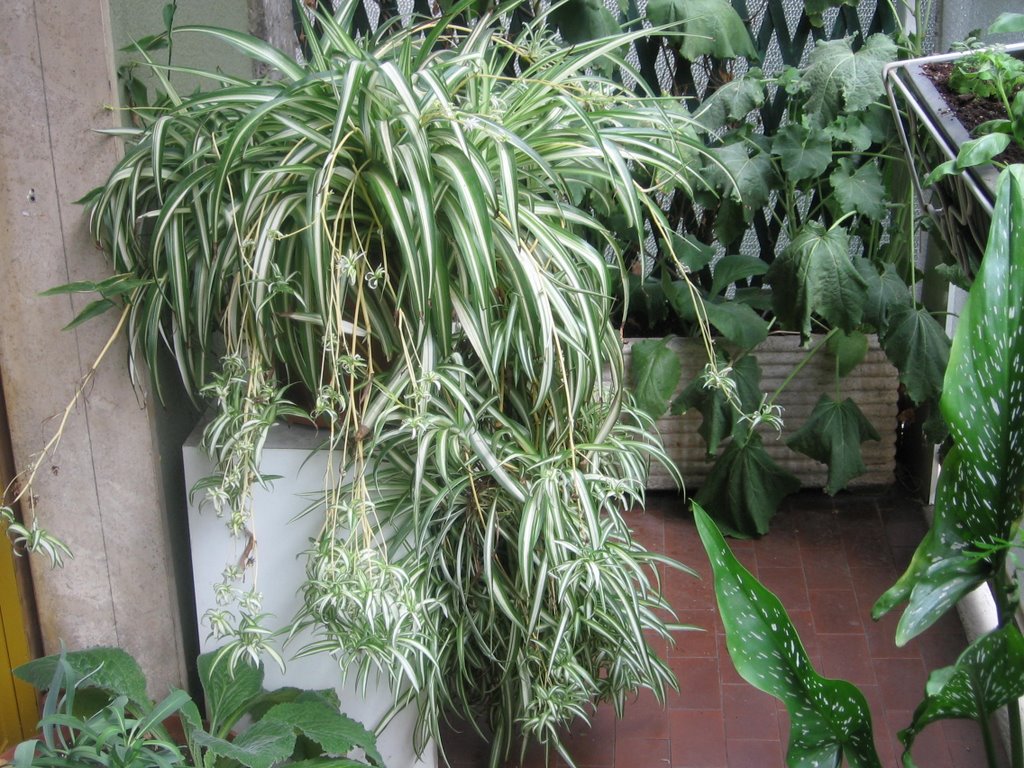
Caterpillars : these are a regular problem in the late summer. The type we mostly have come from a small brown moth and are green and “loopy”. I pick them off by hand and take them down into our courtyard and let them go on the rather weedy lawn. The idea is to avoid killing them, but I suspect I’m really just feeding the birds. When my son was little, we did have a "caterpillarium" one year. I planted some small spider plants in one those big containers which are used to store kids toys, covered it with foil wrap (with breathing holes) and transferred all the caterpillars we found to their new home. We then watched them as they ate, grew, pupated and turned into moths. It was fun, and as I always have thousands of baby spider plants growing on my "adults" (photo above), meant I lost nothing that couldn't be easily replaced.

Red Spider Mite : these are the bane of my existence and from April onwards take up most of my gardening time and energy. Last year I tried a garlic based spray, but it didn’t work, possibly because I waited too long before I started using it. It also meant that the whole balcony stank of garlic. This year I started looking for the beasts very early, and either picked off the leaves or, when I found just one or two, simply sprayed the undersides of the leaf with water and wiped the mites off. I then went on spraying all the plants that I thought might be at risk either with the garlic solution or just with water. With plants in smaller pots I simply upended them and stuck them under the kitchen tap. Except in a couple of cases it’s worked, and I’ve only had to use the chemical spray a couple of times for plants which I’d missed and where the mites had really taken hold. The chemical spray has been necessary though. My son was trying to grow runner beans, which we haven’t sprayed chemically at all, but despite all the water spraying and lots of tender loving care, they’ve ended up in a very sorry state.

Aphids : these have only been a minor problem this year. At one point I found a lot on my Mandevilla (photo right), but luckily the same day I found a ladybird wandering around the balcony - unusual, as they're not very common here. I transferred her to the Mandevilla and that solved the problem. But other years I’ve sprayed them with an oily mixture – it's supposed to clog the pores they breathe through.

Monday, July 31, 2006

Vinca and Surfinia

I love periwinkles and nearly always have some of them on the balcony in July and August. Their name comes from the Russian apparently – pervinka, meaning first flower. That presumably refers to the little blue creeping ones, Vinca minor. The ones I use, Vinca Rosea, appear in our local garden centre at the beginning of July. They don’t seem to get attacked by pests and diseases and are great for filling in holes left in containers because other things have died. This year though I’ve put them all together, and they’re just a mass of flowers.

But although they’re easy to maintain, I don’t find them easy to grow. I tried again this year using seeds from last years flowers, but failed miserably. The book said to sow in March at about 20° and keep them in the dark for three weeks. That meant in the house, as the temperature outside in March is nowhere near that – especially this year, when we had a long cold winter. So they lived under the bed for a while, but to no avail. It may have been the seed or the method, I’m not sure. I’ll try again next year.

Another “bought” success this year has been my yellow surfinia. I saw it in a roadside florist’s kiosk and couldn’t resist. I’d heard they were delicate, so didn’t have very high hopes, but it’s been wonderful. It’s quadrupled in size and has flowered non-stop, so I’ve spent half the summer dead-heading. I usually prefer ordinary petunias to surfinia, as I’ve found them a bit straggly in the past, but this one is so bushy that I’ve had to change its position – at the beginning I had it on the inside of the balcony, but after a few weeks could hardly get past it. So it’s now trailing over the balustrade. The only thing I hate about it is that, like all petunias, it’s incredibly sticky. The grower who manages to develop a non-sticky petunia is set to make a fortune ….

Saturday, July 29, 2006

On Zinnias and Peanuts

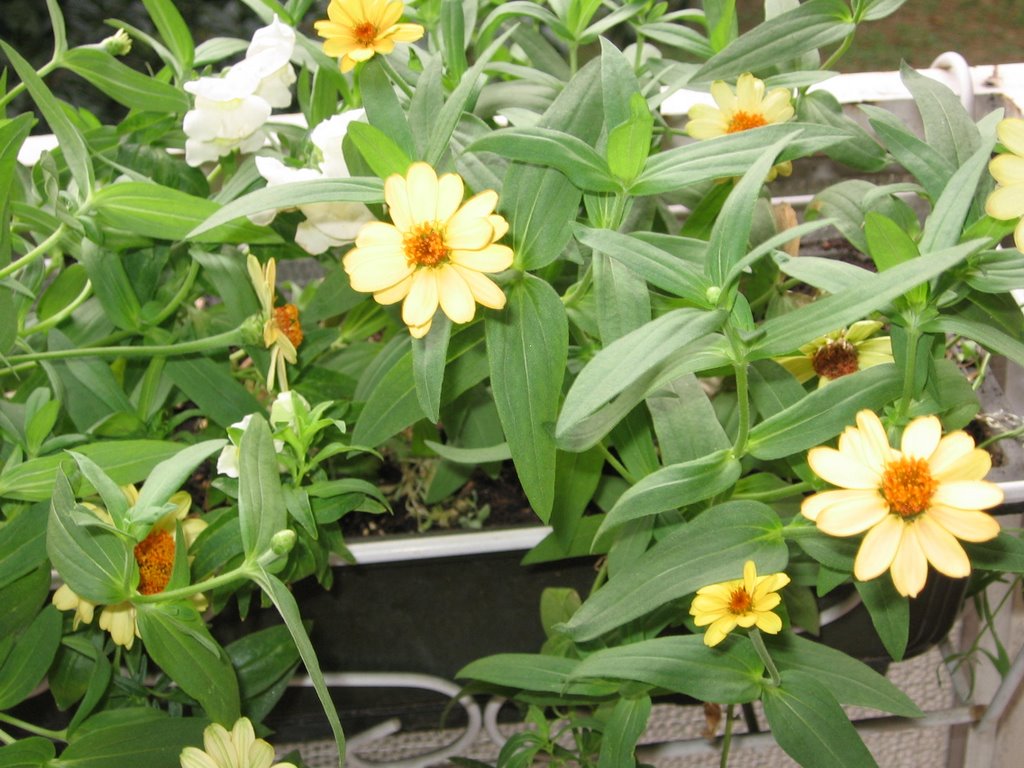
But let’s start with the successes … This year I’ve been really proud of my zinnias and my hollyhocks. The zinnias came from seeds taken from one small plant which I bought last year, and have done extremely well. Our conditions suit them down to the ground – hot sun, limy water... I also tried a trick I’d read about in one of my gardening books – peanut shells in the earth to aerate the soil and provide a gradual, non-nitrogen rich fertiliser. It seems to have worked.

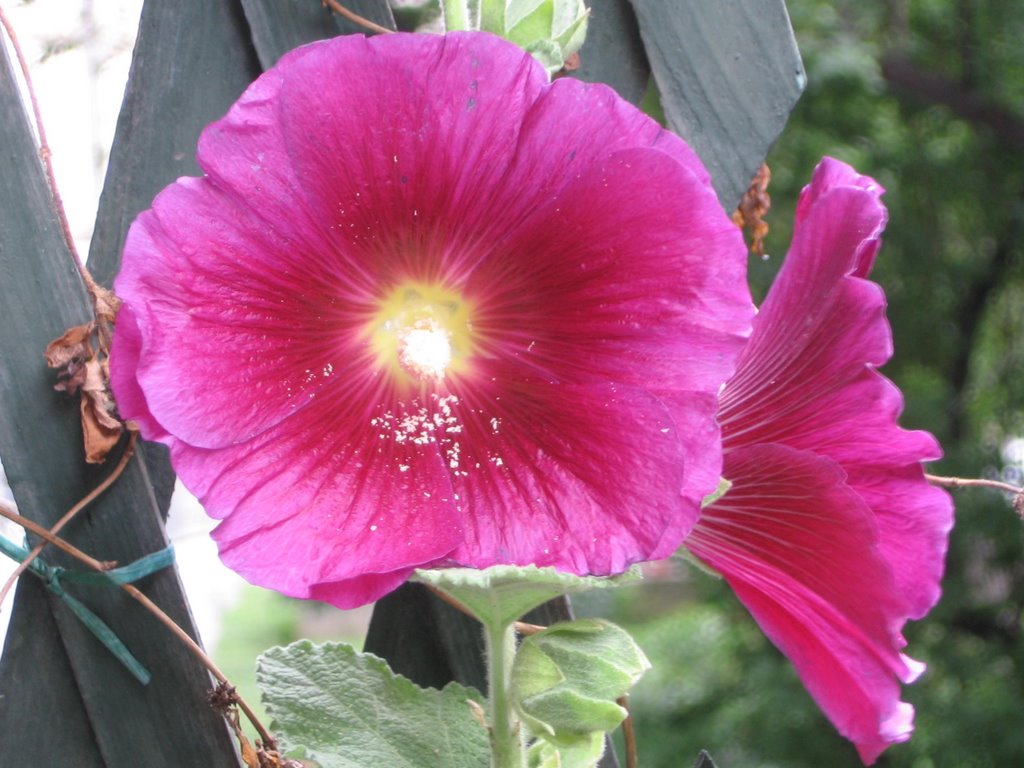
I was also really pleased with my Hollyhocks. They were an experiment as I got the seeds from England and wasn’t sure if they’d take kindly to being pot bound, or to the temperatures here. But they’ve been wonderful. I had three – pale lemon, pale pink and a wonderful colour which isn’t mauve, isn’t purple, isn’t red and isn’t pink, but is somehow all of those rolled into one. They’ve been flowering for weeks, and though they’re now past their best are still forming buds. They lost a few lower leaves to red spider mite early on in the year, but since I dealt with that haven’t had a single problem.

I'd never seen hollyhocks in Milan before I
planted mine, but this year there’s been a glorious display of them growing along the tram lines near Piazza Cinque Giornate. There’s no way they could have got there by chance – someone wanting to brighten up the city must have scattered the seeds. And they were wonderful –about 30 of them in every colour you could imagine. Some of their seeds are now germinating on my back balcony ….

Friday, July 28, 2006

Problems, problems ...

Gardening without a garden is not easy ....

Firstly, lack of space. Where do you put your seeds and your cuttings? If you want to grow bulbs, biennuals and perennials where do you put the plants which aren't in flower to make space for those which are? And when you've finally got every inch crammed with plants, how do you get a chair in so you can sit and enjoy them?

Secondly, the position of the sun. I have an east facing balcony and a west facing balcony, so the plants on each only ever receive light from one direction and inevitably all end up craning desperately away from the house. Containers can be turned around of course, but this can be difficult if you have trailing plants which are just too big to have on the inside of an average sized balcony - mine is only about a metre across.

The amount of sun is also a problem. My balconies are each out of direct sunlight for twenty two hours out of every twenty four, as there are other tall buildings on both sides. But when the sun does hit, the balconies are a sun trap. We're in Italy and in the afternoon on the west facing balcony, the temperature can soar for a short period to over 55°C. The balcony sides are opaque glass, and plants can easily scorch.

Then, there's the lack of rain. This not only means that everything has to be watered by hand, with tap water that has an extremely high calcium content, but also that leaves don't get washed naturally. They get dusty and grimy (Milan is not renowned for its clean air) and need cleaning so they can breathe. And pests which love dry conditions, such as red spider mite, have a field day. (If you stick with me, you'll hear a lot more about red spider mite).

If you're a balcony gardener, you'll probably be able to add to the list. Gardening books don't seem to help much - they seem to ignore the specific problems and presume you're content to buy pre-grown plants from the garden centre at the beginning of the season and throw them away at the end. Or more likely in the middle when they're attacked by insects, or mould or whatever. Pretty maybe, but it destroys most of the fun.

So, here's the alternative guide to balcony gardening - problems, solutions, successes and failures. Usually mostly failures, to be honest. But probably some other quirky stuff in between. And photos - if I can ever find out how to put them on ....


Related Posts with Thumbnails