Showing posts with label Annuals. Show all posts

Monday, September 01, 2008

Balcony gardening ... or just exterior decorating?


What makes for a good balcony garden? Is it the variety of plants? How healthy they are? The visual impact?


Probably the answer is all of these. But it's difficult sometimes to score highly in all three categories at once. Playing safe and only choosing plants which you know will do well often means a balcony with just the old favourites - pelargoniums, surfinia and, here at least, plumbago. Creating visual impact often means restricting the plants to just one or two colours. Going for variety can mean that half your plants are experiments that don't work and end up looking tatty.


I'll cheerfully admit that my balcony definitely comes into the "variety at the expense of looking tatty" category, especially at the moment. It's the end of the season and even the plants which did well are looking as if they've had too much sun, fought off the pests for too long, and put out more blooms than they've got strength for. Those tell tale brown stems are starting to appear, and dead-heading no longer produces the same amount of flowers as it did a couple of months ago. And most of the experiments have just given up and died. Work on the balcony now consists chiefly of tidying up and pulling things out.


But while I was on holiday I came across some balconies whose owners had clearly gone for a different approach - visual impact at all costs. And some of them were stupendous, despite being incredibly simple and confining themselve to the old favourites. I loved the mass of pink ivy-leaved geraniums growing on the balcony in the top picture, and the strong colours of the ever-present surfinia too. And the salmon coloured zonal pelargoniums reminded me that my own, though they've been wonderful for several years, are now past their best. It's time to take cuttings and start again.


These begonias weren't quite so interesting, but better than the photo shows - as ever it's the problem of photographing red.


But my favourite was a balcony with no flowers at all - just leaves. A whole set of containers full of coleus, in an amazing variety shades and patterns. I've been meaning to grow some coleus for ages but not got around to it. Next year I certainly will.


For me these single-colour, single plant balconies aren't what gardening is all about. It's just exterior decorating - though I admit that the condition of the plants on these balconies showed that their owners certainly knew how to keep them healthy. But it's a get-plants-from-the-garden-centre-and-throw-them-away-at-the-end-of-the-season approach which would, as far as I'm concerned, take all the fun out of it.

So my balcony will probably never smack you in the eyes like these did. A pity, because I enjoy the visual impact of plants too. But it would mean giving up too much. I'll stick with looking tatty.


Wednesday, August 20, 2008

Balcony Stalwarts


Visit the balcony in the late summer and you'll always find a number of Rosy Periwinkles blooming away. They're invaluable. When other plants start succumbing to pests or diseases and dying off, leaving ugly gaps in the containers, I pop in a periwinkle. I nearly always have a few of the white varieties on hand for emergencies - that way they can go into any pot, regardless of the colour scheme without looking too out of place. Totally resistant to pests and diseases themselves, it doesn't matter if there are still spores or eggs left over in the soil - they won't be affected.

This year though I decided they deserved to be included in their own right, and I planted a container on my office balcony, just outside the window, using a pink variety mixed in with some white Impatiens. I'm not a great pink lover, and I'm still not sure if I like it. It's pretty - but too pretty somehow. Chocolate boxey.


The combination has been great in terms of flowering though. They've been blooming non-stop since I put them in. The Impatiens was a risk - I've never had much luck with it before. But it's been fine. Perhaps because this summer has been cooler than usual, or perhaps because the office balcony is in a slightly different position to the balconies at the flat.

Rosy periwinkle is native to Madagascar. It used to be called Vinca rosea, but the name has now been changed to Catharanthus roseus. It's a sun lover, but can also cope with semi-shade. It won't survive the winter though, dying off when temperatures drop below about 5°C. I've tried bringing it indoors, but have never had much luck.


I've also never had much success starting them off from seed. The seeds need temperatures of at least 22°C and a period of total darkness to germinate. I did once try starting them off under the bed, which worked, but there's still the problem that the seedlings take a long time to reach the flowering stage. If you want to grow them as annuals you really need a heated greenhouse, or the summer is over before you see any results. They can also be propagated from cuttings, though I've never tried. A project for next year maybe.

They have no particularly fussy habits, and will grow in a variety of soils and under various conditions. I use all-purpose compost, water generously and feed about once a week with a liquid fertiliser. They seem to do fine.


Sunday, June 15, 2008

Gardener's Bloom Day : Nasturtiums


Wow, are we late this year. I've just checked back to last year's June GBD post and the first photo was plumbago in full bloom. But today, although it's healthy and green,there's not a bud in sight. Hardly surprising when the temperature outside is 16°C (61°F) at 3pm and it's been raining almost uninterruptedly for the last ten weeks. They say it's all due to La Nina, but whatever it is, it's playing havoc on the balcony, with everything doing well but weeks behind schedule. We harvested the first japanese loquats from the trees in the condominium garden around about May 20 last year too, and they were delicious. This year they finally ripened this week and were completely insipid.

I didn't record temperatures last year and now wish I had. But I remember that we were already complaining about the heat and humidity. Today I'm sitting here in a woolly jumper. I don't remember that ever happening - according to the BBC's average temperatures it should be anywhere between 27-35° C (81-95°C). There are advantages of course - the main one being that I'm not complaining about the heat and humidity. But there have been noticeably fewer pests this year. Not only has red spider mite been far less of a problem, but whereas this time last year the caterpillarium was already in full swing, this year I've hardly noticed any caterpillars at all (not that that's necessarily a good thing - it also means no butterflies).


When I realised that Gardener's Bloom Day had come around again, I panicked. Apart from plants like pelargoniums and surfinia which I've amply blogged about recently, there's nothing at all impressive in bloom. Or so I thought - then I went out and found that the nasturtiums had bloomed overnight. never mind that they were in May's post last year. This year they're my flower for June.

Nasturtiums like sun - which explains why they're so late this year. They are originally from South America and give the most flowers if they're planted in poor soil - very poor soil. Monty Don suggests planting them in the dust you sweep up from the garden path - check out the video link on this page from the BBC to see why.

Apart from the great flowers they give, they're also edible - add the young leaves to salads for a peppery taste a bit like rocket, or use the young seeds as a substitute for capers. The leaves are also good for you as they contain Vitamin C and iron. But if you want to grow them specifically for food, plant in rich soil - you won't get so many flowers but you'll have a lot more leaves. For a salad recipe see here, or here you'll find a recipe which uses the flowers.


They also have antiseptic properties, and you can make a tisane out of the flowers and leaves which is supposed to be useful against bronchitis.


Sunday, June 08, 2008

Pretty Petunias, Super Surfinias


I have a sneaky weakness for petunias and surfinias. They must be the only real rival to pelargoniums for the title of the ultimate balcony plant. Stick 'em in a container, give them the right amount of tender loving care and they'll grow, and bloom, and grow and bloom all summer.

This year though, I have to admit that I've gone a bit over the top. It all started back in April when I saw that petunias had started to come back into the garden centres, and immediately started buying. I hadn't seen ordinary petunias for a couple of years, as surfinias had become so poular here that they'd pushed them right out of the garden centres. This year, I thought, I'd go for petunias, just for a change.

But then the surfinias started appearing too, and I couldn't resist. Especially when I saw this yellow one which did so well for me a couple of years back. So I now have far more than I ever intended. And guess what - I don't care a bit.


Surfinias are a Japanese invention. Back in the mid-1990s two Japanese companies - Suntory (better known for whisky) and Kirin (better known for beer) - each developed a variety of trailing petunia. Suntory's was known as surfinia and was propagated from cuttings, while Kirin's was propagated from seed and went under the name of Wave petunias. They became immensely popular, to the detriment of the upright varieties, but now, if our local market is anything to go by, ordinary petunias seem to be making a come-back.


An enormous number of new varieties of petunia (of whatever type) are produced each year - anything up to a thousand - so don't be surprised if you've never seen exactly the ones I have here. They're sun-lovers, and extremely thirsty - when it's really hot you'll need to water them a couple of times a day. But they're fairly resistant. When they get thirsty they flop immediately and look exceptionally pathetic. But a drink soon puts them back on their feet.


They also get fairly hungry and need regular feeding with a high potassium but low phosphorus fertiliser. They also dislike alkaline conditions and prefer an acidic compost.

If they have a disadvantage, it's that they need constant dead-heading. They bloom copiously, but the blooms don't last long. And they're sticky- yerk.


But they're so lovely it's worth it. Bloom on, babies.

Monday, April 07, 2008

Annuals??


One of the things which I find most misleading about many gardening books, websites and seed packets is the way they class as "annuals" plants which just aren't. Alyssum and antirrhinums for example. If you're very lucky you might see an expression "usually grown as annuals" or which is always a give-away that they're actually perennials, or the more explicit "beautiful annual (strictly perennial) flowers", but there's rarely an explanation and often no indication at all. For the beginner it's confusing, and may well lead to plants being thrown away which would continue to do well the next year if left to their own devices.

The two main reasons given for treating perennials as annuals are usually the fact that they won't survive low winter temperatures, and that they won't flower as well the next year, but neither of these are necessarily true.

Temperature of course depends largely on where you live, and if you have below freezing conditions for most of the winter, well then annuals they probably are. But if you are in a milder or more sheltered spot, wait till spring and see what you manage to bring through.


As for getting fewer flowers, I've found quite the opposite. I've got several so called annuals on the balcony which are now into their second or third year and are bigger, stronger and giving more flowers than ever before. Here for example is my "annual" alyssum. As you can see from the stem, it's no young plant. It's certainly in its third, and possibly fourth year. The antirrhinums in the first photo are the same, and are covered with buds. They're going to give far longer, stronger stems of flowers this year than they ever have before.


I did cover the alyssum in the coldest parts of the year, as I also did for the marigolds and the surfinias. The marigolds eventually gave up, so maybe they really are annuals, but the surfinias certainly aren't. This year I was misled by a mild spell back in February, uncovered them, and lost them when the temperature suddenly dropped overnight. But last year, the overwintered surfinias from the previous year flowered all summer.

Obviously the temperatures here aren't that cold. It rarely drops below about -2° or -3° centigrade, and the balcony provides a sheltered environment where the plants can snuggle against the walls of the house for warmth. But the antirrhinums were uncovered on the edge of the balcony all winter, and were even
snowed on with no detrimental effects at all.


Another plant which I'd always seen described on seed packets as an annual (now why would seed producers want you to believe plants are annuals when they're not , I wonder?) is Mirabilis jalapa. So when mine died down over the winter, I didn't think twice about it. But being too lazy to go out and throw it away in the cold, it stayed there till about six weeks ago. And when I emptied the containers I found thick tuberous roots. Not the usual sign of an annual. So I stuck them back in the pot to see what would happen. And lo and behold .....


Will I get the same number of flowers this year as last? I'll have to wait and see. If not, I'll go back to treating it as an annual and growing from seed each year. But it's going to be interesting finding out.

So don't give up on plants just because of the description they're given. If you think you can bring them through the winter for a second year, try it. You may end up with a better show than you got the first year.


Sunday, May 27, 2007

Calendar Calendula

The flower on my calendar this month is calendula officinalis. It’s a plant I’ve never had much luck with – it germinates without problems, but however much I pinch out the growing tips, it seems to end up looking gawky, straggly and out of place in the container. My local garden centre manages to get them to be low-growing, bushy and compact, but I’ve never quite worked out how. Different varieties maybe, though otherwise they look the same. And then it seems to be very prone to attacks by powdery mildew – ironic as one of its uses is supposed to be as an anti-fungal agent.

According to the calendar it has been used medicinally since the time of the ancient Egyptians. It has anti-bacterial and anti-inflammatory properties and can be used externally against a variety of skin complaints – acne, eczema, boils and abscesses, minor burns and other wounds, nappy rash and chapped hands or lips – and also against haemorrhoids, strains, bruises, varicose veins and what I think might be housemaid’s knee. But don’t quote me on that one as I’m making a wild guess at the translation.

The useful part of the plant are the flowerheads, which are gathered from June to September – best according to the calendar between 11 and 12 o’clock – and dried before use. They can be prepared in various ways, of which the two simplest are :
  • As a tea. Steep 1-2 teaspoonfuls of the dried petals in 150 ml of boiling water for 7 minutes, then strain. Apart from medicinal uses, this can also be used as a rinse to lighten hair and give it a golden tint.
  • Or you can soak nine flowerheads in milk for half an hour. You then strain off the liquid and use a cotton wool pad to dab it on to acne.

The best English account I’ve found on the web is at Plants for a Future, though as ever Purple Sage is also very good. These two also list other medicinal uses – against stomach ulcers, bad circulation and various other ailments. They also mention its use in cooking – the leaves can be used in salads, and the petals used as an alternative to saffron to colour soups, rice etc.


Saturday, July 29, 2006

On Zinnias and Peanuts

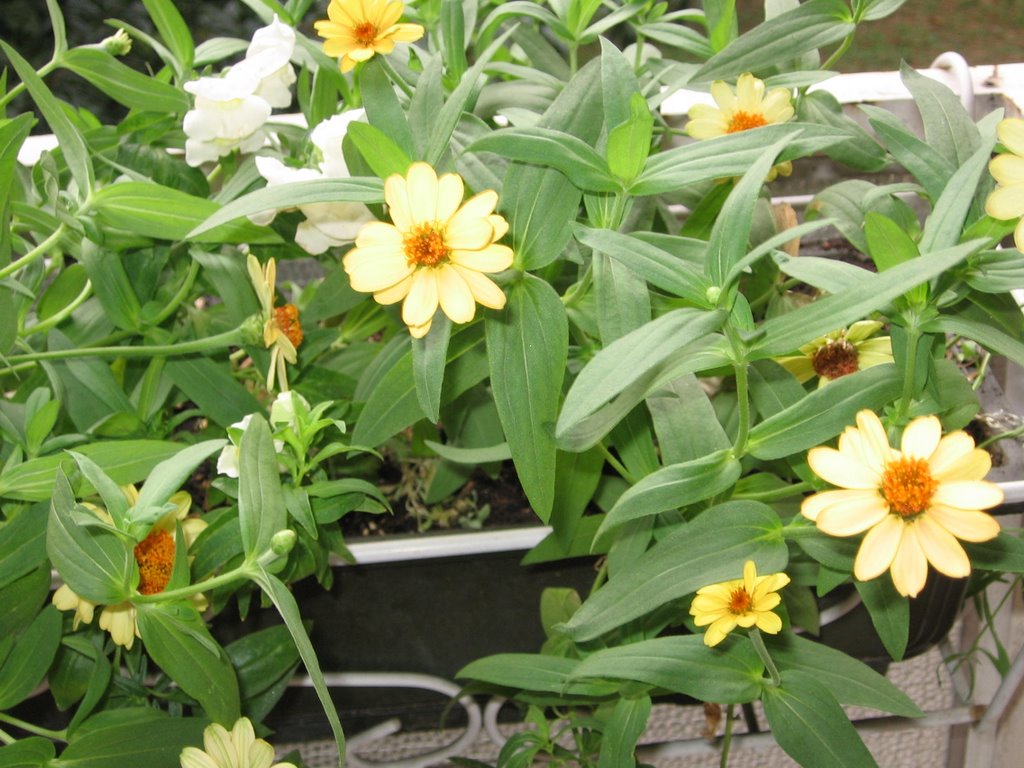
But let’s start with the successes … This year I’ve been really proud of my zinnias and my hollyhocks. The zinnias came from seeds taken from one small plant which I bought last year, and have done extremely well. Our conditions suit them down to the ground – hot sun, limy water... I also tried a trick I’d read about in one of my gardening books – peanut shells in the earth to aerate the soil and provide a gradual, non-nitrogen rich fertiliser. It seems to have worked.

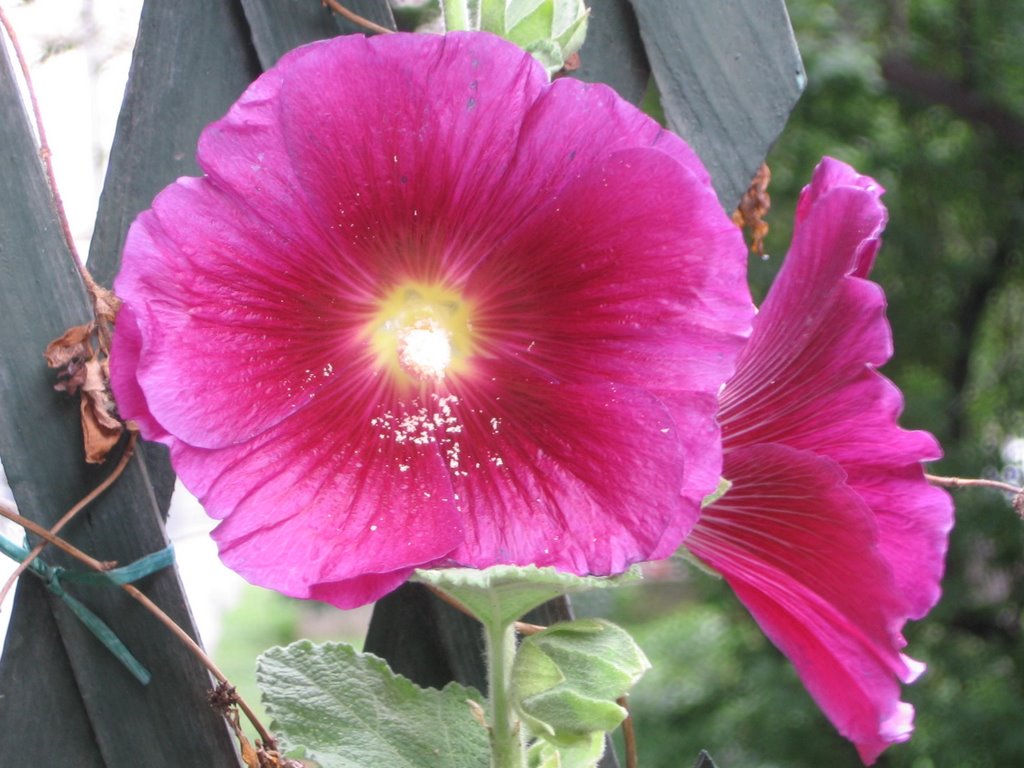
I was also really pleased with my Hollyhocks. They were an experiment as I got the seeds from England and wasn’t sure if they’d take kindly to being pot bound, or to the temperatures here. But they’ve been wonderful. I had three – pale lemon, pale pink and a wonderful colour which isn’t mauve, isn’t purple, isn’t red and isn’t pink, but is somehow all of those rolled into one. They’ve been flowering for weeks, and though they’re now past their best are still forming buds. They lost a few lower leaves to red spider mite early on in the year, but since I dealt with that haven’t had a single problem.

I'd never seen hollyhocks in Milan before I
planted mine, but this year there’s been a glorious display of them growing along the tram lines near Piazza Cinque Giornate. There’s no way they could have got there by chance – someone wanting to brighten up the city must have scattered the seeds. And they were wonderful –about 30 of them in every colour you could imagine. Some of their seeds are now germinating on my back balcony ….
Related Posts with Thumbnails