The medlar tree flowers between November and February


I suppose you know that winter is coming when you suddenly can't think of anything to blog about. I can't believe how long it is since the last post. I seem to have been working on the balcony as much as ever, but it's all clearing up work and settling things down for the winter. The excitement of the summer now seems long gone.The weather has changed this week and it's got noticeably colder - down to about 8° at night. So I've started to bring in the plants that won't survive outside when the cold really hits. I could probably have hung on a bit longer, but the heating is now starting to come on, and I wanted to get them in before the difference in inside/outside temperature got too great. The tree is back in its winter position in the sitting room and I've taken several houseplants into the office. My flat is fairly dark with no window-sills - while my office has a big window with a large wide sill, and plants do very well there.


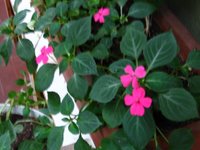
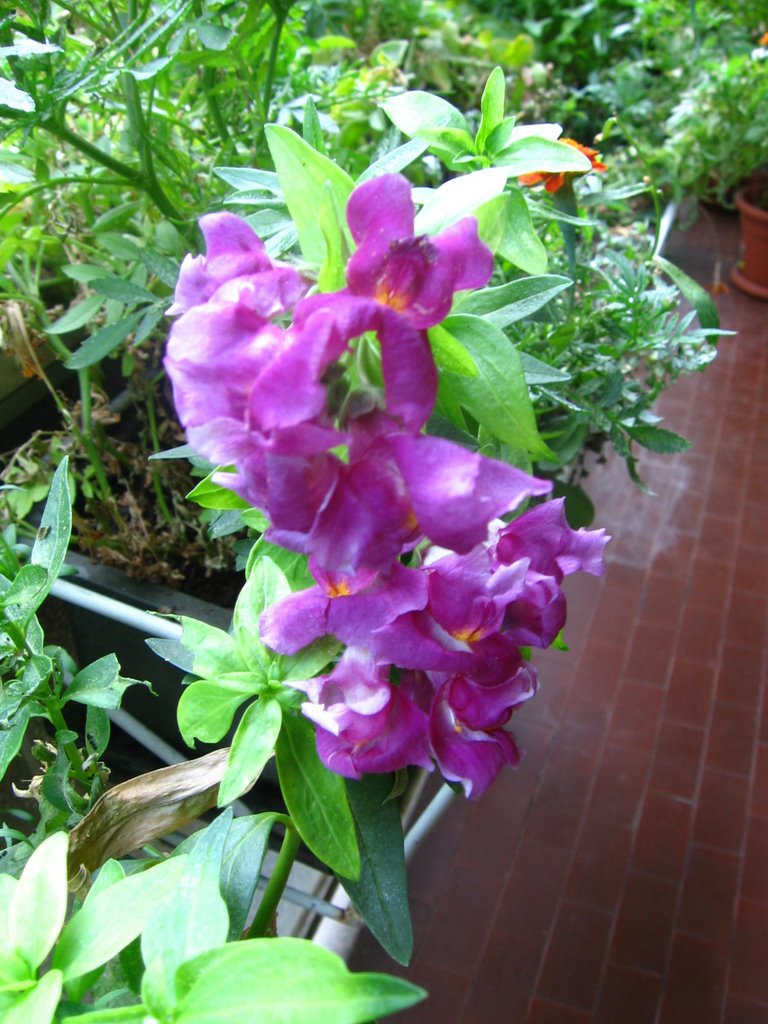
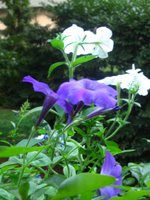
At the moment the only things which are really flowering are the Cyclamen, though as you can see from the photos a couple of marigold bushes and a few other things are hanging on in there heroically amongst the dying remains. I don't think they'll last much longer though. Even the Zinnia have finally given up. The Chrysanthemums (or whatever we're supposed to call them now) are full of buds but won't be ready to flower for another two or three weeks.


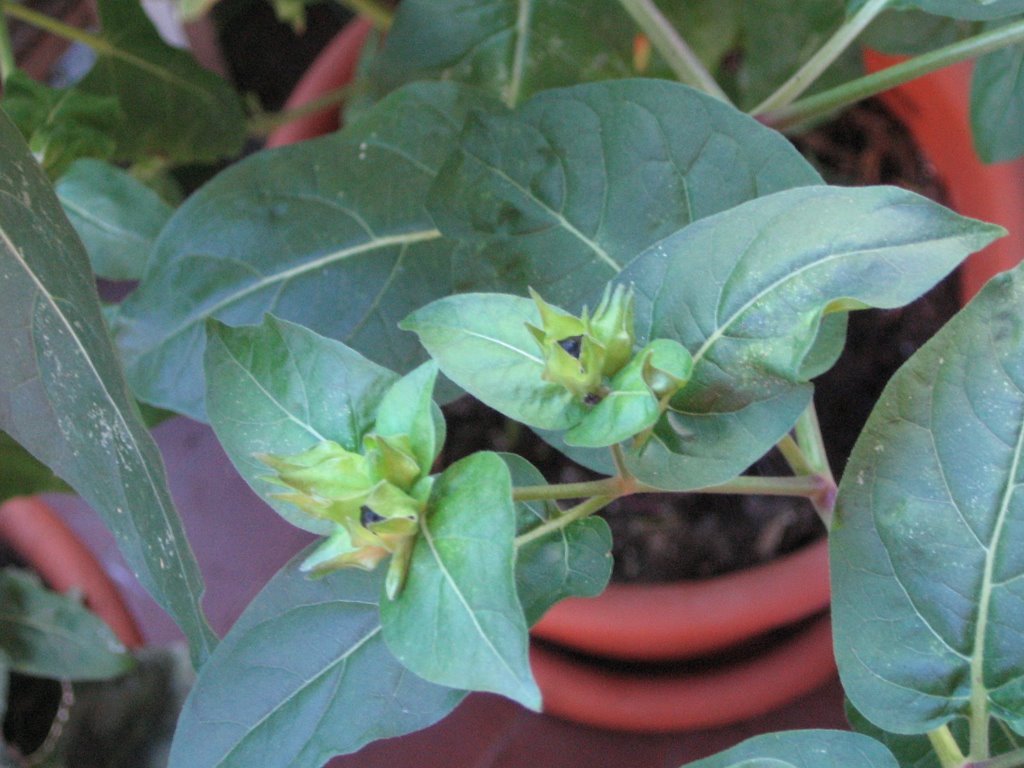
10.30 : Have spent the last half hour dead-heading and seed collecting. The mirabilis jalapa is still flowering, but is now covered with seeds. I’ve already collected enough to start a nursery, but I can always give them away. Every so often I drop one and it falls off the balcony onto the path below where the little kids play. They’re poisonous, so I go down and spend ten minutes hunting for them just in case.
2.30 : Time for the weekend shopping. As we go in, a stand of plants catches my eye - cyclamen at ridiculously reduced prices. Look a bit closer and see why – they’re half dead. But there are three at the back that look all right. What the hell. I’ve got some coming on, but I’m not convinced they’ll bloom this winter. And mine are all red or white – these are violet. Add them to the trolley.You may already have seen that Carol of May Dreams Garden (see the link in the sidebar) has proposed organising a book club for the winter months. The idea is that people should suggest books they’ve enjoyed which other people could read and then comment on.
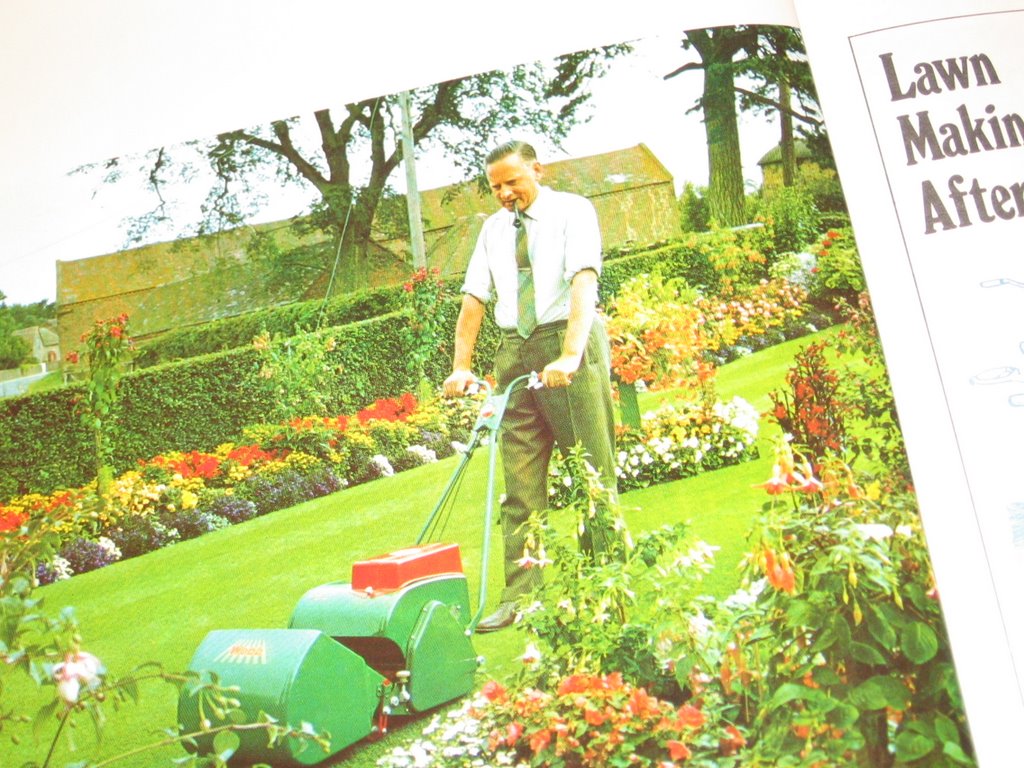
I immediately sat down to write a list – and found I couldn’t. For obvious reasons, Carol’s two criteria are that the books should be still in print and written in English – and most of mine aren’t. If I say that one of the books I refer to most was written in 1969 by Percy Thrower , you’ll get the general idea (no, I wasn’t gardening then – I inherited it. But that’s for another post). The wonderful thing about gardening books is that they don't go out of date - the new ones may describe new varieties and have new ideas, but the old ideas are still the basic ones. The only thing about Percy that drives me mad is that he clearly believes he's writing for a male audience. A woman is simply the nuisance in the house who demands that certain plants are grown to provide cut flowers. But I'll forgive him. (And don't you love the shirt and tie for cutting the lawn?)
Back to the book club. As I couldn't recommend anything off my shelves, I decided to write a wish list instead, and spent half an hour surfing Guardian Unlimited’s gardening book section. I ended up with a list far too long to post, but I’ve whittled it down and you’ll find it below. I have no idea if these books are really good or not, but they look interesting and I wouldn’t say no to finding them under the tree on Christmas morning (just in case my husband happens to be reading this) :
Michael Pollan - The Botany of Desire: A Plant's-eye View of the World, Bloomsbury Publishing
Christoper Lloyd and Graham Rice - Garden Flowers from Seed, Penguin (UK) Timber Press (USA)
Alan Titchmarsh – Alan Titchmarsh, the Gardener's Year, BBC Books (or anything else by Alan Titchmarsh, come to that).
Charles Chesshire- Japanese Gardening, Aquamarine
Steven B Carroll - Ecology for Gardeners, Timber Press - this is available for limited preview on Google.
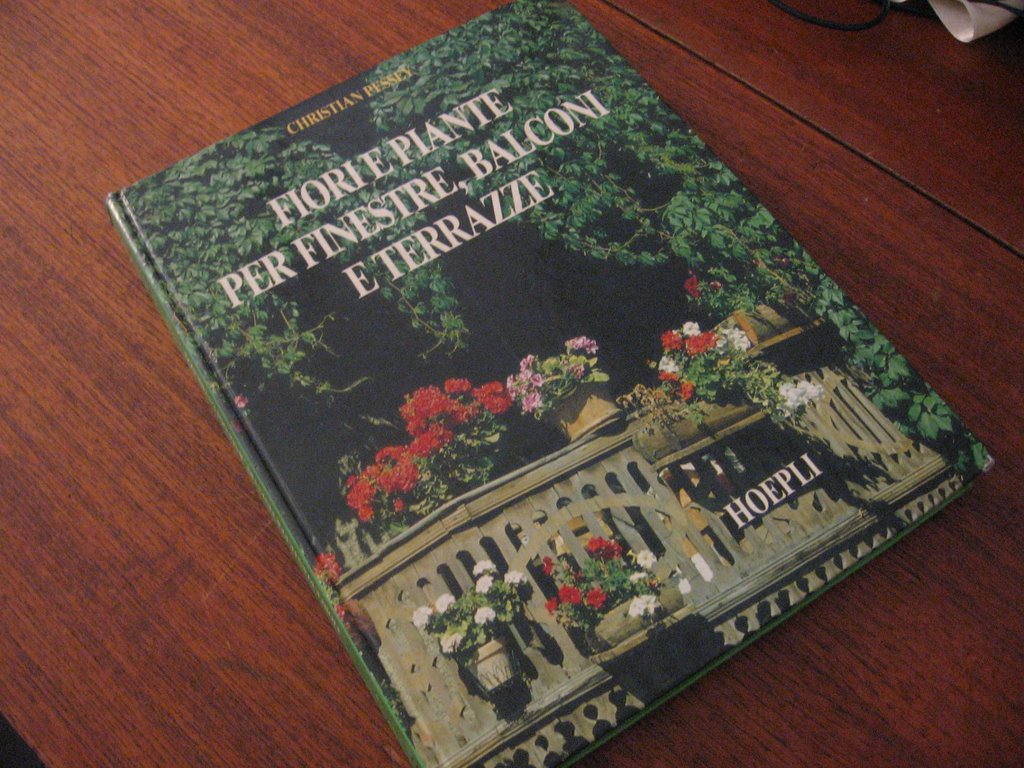
Our local library has just closed for three months, for building renovation work, so I took advantage of the fact that we were able to take out more books than usual for a longer period and got several large reference books – the sort that you want to dip into a bit at a time, rather than read straight through. One of the books I took out was by Christian Pessey. The original was in French, but an English translation of the Italian title would be Flowers and Plants for Windows, Balconies and Terraces. Reading it got me thinking about recycling.
Plessey’s book was interesting from the re-use point of view. Although he didn’t explicitly mention environmental issues, he suggested various ways that plastic packaging could be used in gardening rather than buying new stuff. Some of his ideas were not new – for example, using yoghurt pots for seedlings instead of buying more plastic pots (though even there it had never occurred to me to use a match or red hot needle to make the drainage holes – I tried it out with a candle flame and it was much easier than my usual clumsy attempts with a skewer). But others, though simple, I’d never thought of – for example cutting off plastic bottle bottoms to make mini-cloches to fit over pots with cuttings or seedlings.
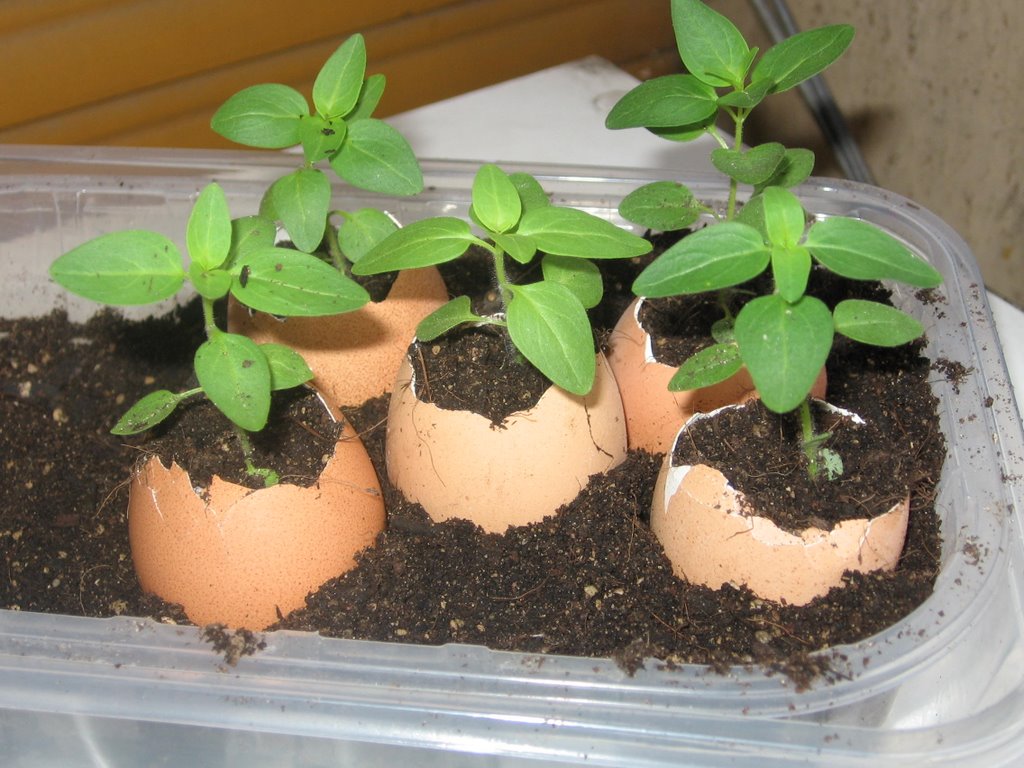
But my favourite idea was that of using the shells of boiled eggs (with a hole pierced in the bottom for drainage) instead of small plastic or peat pots. (For reasons for avoiding peat click here ). They have the same advantage as peat pots in that the whole “container” can be transferred to the final planting position, without disturbing the roots of the young plant, and the roots will simply grow through the shell, acquiring nutrients on the way. I presume this means a lot of calcium, so it’s probably to be avoided for lime-hating plants, but it would be great for things like zinnias which love lime.
On the balcony, the first signs of autumn are definitely appearing. But while a lot of things are starting to fade, others are waking up after the long hot summer, like these little cyclamens. The trees are still green, but my neighbour’s Virginia Creeper is starting to turn and the flowers on the trees outside my window have been replaced by berries. It’s also dark now by 7.30 –the worst sign that winter is on the way.


few years ago, and at first didn’t know what it was. So I stuck it in a pot to see what happened.
Where did it come from? It must have just drifted in on the wind. Plants do seem to be fairly good at finding themselves new homes. Watching Star Trek : Deep Space Nine the other night I was amazed to see that Bromeliads are well established on the planet Bajor, at least 50 light years from Earth. In fact, one of the characters Vedek Bareil explained that he had studied to be a gardener, and that Bromeliads were his passion. Now how did they get there? I can take teletransportation and holodecks without blinking, but the idea that identical vegetation evolved on two such distant planets is stretching it too far. Seeds thrown into space after an asteroid impact and left to boldly go where no plant has gone before ? Unlikely. 50 light years is a long way without Warp Drive …
I am a
Daisy
What Flower
Are You?