Monday, October 06, 2008

Tulips from Amsterdam.


Well, daffodils actually. But they could have been tulips.

We had to go to my son's school last week for a start of year meeting, and as we were waiting for the bus on the way back, I noticed that the little Piazza in front of us was covered with crates and crates of bulbs.

Bulbs. (Fall-rise intonation, as in Yes, that's what I said). We don't get bulbs in Milan - or at least, only very rarely, sold in ones or twos, and at exorbitant prices.


Milanese bus stops have this neat litle device which tell you how far away the next bus is, and this one said five minutes. So I left my husband and my son at the stop and popped across the road for a look. Just a look you understand.

But when I saw the prices ... In Italian terms, they were giving them away. And I had almost no money with me.

I looked around for the guy who was selling, and heard him talking to another customer. He was speaking in English - with a decidedly Dutch accent. Aah. (Fall-rise again, this time as in So I'm buying direct from the producer. That explains the prices.) I asked him how often he was there, with a view to coming back with some cash. Once a year, was the reply.

Ah. (Falling tone this time as in This could be a problem.) But though I didn't have much money with me, I did have a husband. So back I go and say that they could get the bus and go home, but I was going shopping - oh, and could I have some money?

An audible sigh was heard and eyes went up towards heaven. But a wallet was pulled out and I was handed a blue banknote. I'd been hoping for a brown one, you understand, but he knows me. He knows me.

Back I skip. Almost all the bulbs are tulips, of all the varieties under the sun. It's tempting, but I "did" tulips this year, and space on the balcony is limited. So I go for daffs instead.

There are also racks of plants. I avoid the cyclamen, which I've got already, and pick up six heathers, a veronica and some asters. All so cheap that I'm not even counting. But that's about all I can carry, and I must surely have spent all the money I've got by now. How much? €12,45 - but call it €12. Whaat? (rise-fall intonation as in This guy's giving them away and he's still giving me a discount?)

So at that point I decide that I might just stretch to some more bulbs. Let's round it up to €15 and call it a day ...


Saturday, September 27, 2008

Just watch ....


Go watch this on Youtube : Planet Earth

Trust me.


Thursday, September 18, 2008

I forgot...


Browsing through some blogs yesterday, I came across some Gardeners' Bloom Day posts. Eeek ... is it the 15th already? This month I completely forgot about it for the first time ever - and I've been posting for GBD since it started. I've been late before, because of lack of time, but I've never just forgotten. Old age creeps insidiously closer...

But perhaps one of the reasons I didn't think about it is because when I asked myself what was in bloom on the balcony this month, the answer was ... nothing much. Or at least, nothing that I haven't already blogged about in the past couple of months. The four o'clocks are still going strong, as are the impatiens and periwinkles. The purple surfinia have had it and the yellow surfinia and purple sage are past their best. I'd probably have more to show if I'd had more time, but it's been a busy month, and the balcony has been a bit neglected.

But as I walked past
my local garden centre the other day, I saw these. Impatiens New Guinea, growing in a large container together with a small Maple tree. By chance I had my camera with me, and couldn't resist ...


So for this GBD I'm showing you what my balcony could be looking like at the moment if I'd taken as much care of it this summer as the people at the garden centre obviously have with these. I'm not very good with Impatiens New Guinea. They're sun lovers, but need copious amounts of water. And if they're neglected, they succumb very quickly to red spider mite. Each year I try again - I had some lovely pink ones back in the early summer - but sooner or later I lose them.

A pity, because by the time they've grown to this size, they're glorious. Ah well, perhaps next year will be different ...


Saturday, September 13, 2008

Composting on the balcony?


Can you compost on a balcony? I've always wanted to. In my garden in London there's a compost heap, and when we're there kitchen waste, as well as plant waste from the garden, is rigorously recycled. But on a balcony?

Some websites, like this one from the
City of Toronto, say yes. But I've always had my doubts. Is there enough room? Wouldn't the smell be too bad? Even if I could cope with a compost heap outside my bedroom window, I'm far too scared of the neighbours to risk it. (And if you think that's wimpy, you've never met my neighbours).

I've thought of a wormery, but they'd roast in the summer. The temperature on the balcony can go up to 50°C in full sun. So every night there's nothing to do but throw away the vegetable peelings. The hamster does her best, but how much can a three inch long creature be expected to consume?

Then the other day, when browsing Amazon's Home and Garden section, I came across this kitchen waste composter. It seemed the answer. Small - the exact size isn't stated, but it's supposed to "fit under the sink" so fine for the balcony - and promises of "no smells". It went straight to the top of my Christmas wish list.


And then the downer. This product can only be delivered within the UK. Rats.

But I decided to browse a bit further and found that it's sold by a company called
Just Green - and they deliver anywhere.

How does it work? It uses a product called bokashi, a bran based mix containing micro-organisms which break down the waste, producing both compost and liquid fertiliser. And it's only supposed to take a few weeks.

It's not cheap. Apart from the initial outlay it will mean constantly buying the bokashi to keep it working. But gradually it should start to pay for itself, as I no longer have to buy either soil for the containers or fertilisers.

But it's the ecological advantages which are most important :

  • reduced waste to be transported and disposed of - so a saving in energy

  • no more agonising over the ecological soundness of packaged soil - which has already clocked up goodness knows how many transport miles, which - here at least - inevitably contains either peat or coir, and which comes in plastic bags which then have to be thrown away.

  • no more chemical fertilisers to contaminate the soil - which even if it is originally in containers eventually gets thrown away, so that any chemical contents leach into the ground.
So it's back on my Christmas list, as are several other things from the site, and we'll see if it works as well as it promises. Watch this space for updates.


Monday, September 08, 2008

An Interview with Carol of May Dreams Gardens


Most people reading this will already know May Dreams Gardens. It's a blog which I've read regularly for a couple of years now, and though I don't have time to visit and check out Carol's posts daily, I always try and catch up at the weekend. The posts are funny, down-to-earth and always interesting. So I was thrilled when Carol agreed to do an interview for The Balcony Garden on gardening and blogging.


You live in Indiana. For those of us not in the States, can you tell us a bit about it? Is it a good area for gardening?

Indiana is often called “the crossroads of America” because we are located in the Midwest part of the country, and there are several major highways that go through Indiana. I wrote a post back in February about why I like gardening in Indiana.

When did you start gardening? How quickly did it become a passion?

I’m on one of those gardeners who started at a very young age and can’t remember NOT gardening. It became a passion early on and is one of reasons I decided to major in Horticulture in college.

How is your garden organised?

My vegetable garden takes up about a third of my backyard, the rest is lawn and flower beds. The front is a typical suburban front yard like many found across the United States with a combination of trees, shrubs, and flowers.

Is there anything unusual in your garden which is particularly special for you?

The most unusual plant is probably my night blooming cereus which I inherited from my dad. I’m happy whenever it blooms.

Why did you start blogging? Where did the idea come from?

I read about blogs around 2003 or so and started one in 2004 because I like to write. But I probably posted ten times in those first two years. Then in early 2006, I started posting more often, and here I am!

You post more or less every day, as well as frequently leaving comments on other people’s blogs. And have other blogs too. How much of your time does blogging take up?

I’ll admit I do fall behind on leaving comments on other people’s blogs, and probably have a dozen or so that I comment on the most. But, when it comes to the Garden Bloggers’ Bloom Day posts, I try to comment on anyone’s blog who has left a comment. My other blog, which is about my Grandmother’s diaries, doesn’t take any time at all and I usually set it up about a week ahead so it ‘auto posts’ through the week. The posts on my blog can take as little as 15 minutes or as long as 1 hour to write.

The thing I like best about your blog is that it’s so easy to relate to. Nearly always I find myself thinking “I could have written that – if I’d thought of that angle”. You somehow manage to give a creative twist to the most mundane, everyday gardening topics. How do you get all your ideas?

What a nice compliment! My ideas come from being a gardener myself, I guess. The more time I spend gardening, the more ideas I get. And when an idea comes to me, I’ll try to write down a few notes about it so I don’t forget.

You’ve also started some incredibly successful memes – Gardeners’ Bloom Day for instance, which continues to grow and grow. Why do you think it’s become so popular? Will it go on for ever?

I think Garden Bloggers’ Bloom Day is popular because it gives gardeners a good reason to show off their blooms and at the same time compare to what others have in bloom. I’ve learned so much about other climates that people garden in, and who has what blooming through bloom day. Every month, there are a few garden bloggers who post for the first time, and others who drop out. And many gardeners have noted that after doing it for over a year they now have a journal of sorts of their own garden and can compare this year to last year, which they couldn’t really do before. I’m going to keep doing it and I hope others continue as well.


You’ve been blogging for a relatively long time. How has your blog changed in that time? Where do you see it going in the future?

I hope my writing has improved over time! I’ve recently branched out to writing for Examiner.com as the Indianapolis Gardening Examiner, and have been thinking about other venues for garden writing.

Has blogging and the blogosphere changed since you started? How?

Yes, it has changed. There are more blogs, many good blogs. And many bloggers now use sites like Twitter which helps to further create an online community amongst gardeners, and provides a place to provide little updates on first blooms, vegetable harvests, what we are doing in our gardens, etc.

If like me you gardened on a balcony and had limited space, what would you grow?

I think I would grow trough type gardens with miniature plants. I have one garden space devoted to miniature plants mostly hostas and other shade loving plants. I can spend just a few minutes weeding and deadheading in it and then step back and think, “Well, that’s one flower bed done!”.

What was your most important gardening moment?

There are several. I think it is important to plant trees; they will shape the garden for decades to come and help the environment. Another important moment is committing to organic methods only.

What was your most important blogging moment?

The most important moment was probably not on my blog, but because of my blog, connecting with other gardeners and flying to Austin, Texas for what was hopefully the FIRST garden bloggers spring fling. Probably the most touching moment was when Annie in Austin wrote a song about my garden. . But every day, I’m touched by the comments other gardeners leave on my blog and the connections I make through my blog with other gardeners.


Carol, a big thank you. If you're new to garden blogging and have never come across May Dreams Gardens, check it out now. I promise you won't be disappointed!



Thursday, September 04, 2008

Form and Colour, Colour and Form


Whoops - how to lose friends and alienate people. I didn't mean to, honest, but some of you obviously thought that my last post was intended as a rant. It really wasn't and I've tried to explain why in the comments, but I'm sorry if I offended anyone. For the record, I have absolutely nothing against the people who created those balconies or against anyone who has the same attitude to balcony gardening. They're wonderful, and certainly contribute more to making the community attractive than mine does.

But as an attempt to redeem myself, I thought I'd talk about how I do try and create visual impact with containers, while at the same time growing as wide a variety of plants as possible. All my containers are different, but within each container I try and achieve an effect either by combining different colours and/or different forms.


Here's an example from a couple of years back. Very simple - marigolds and yellow surfinias -but it worked wonderfully. The stark browney-gold of the marigolds both contrasted with and complemented the lemony yellow of the surfinias, as did the different forms of both the flowers and the leaves. And they're both set off by the little white daisies peeking out from behind.

This year my most successful container had flowers of one colour only - but with completely different forms : surfinia again and sage (though I'm ashamed to say I've forgotten which one). The photo doesn't really do it justice - the purple spikes of the sage towered above the trailing surfinia, and it looked superb, both from below the balcony and from behind.


I love purple and have a lot of it on my balcony. In this photo from last year, purple and white surfinia mix with pink antirrhinums and blue plumbago (all grown from seed except the plumbago) - again creating harmony and contrast of colour and form.

Purple is one of the few colours I really like using together with pink - especially dark pink. This photo was taken early after planting - imagine them when they'd grown and filled out the spaces.


So my balcony's a hotch potch. I also admit that I usually plant thinking of the view from inside rather than below. And these photos range over three years and were, admittedly, taken when things were looking good. They hide the tatty failures. But I still think they stand up to the ones in the last post, stupendous as they were. And I promise you they're more fun to grow.

Monday, September 01, 2008

Balcony gardening ... or just exterior decorating?


What makes for a good balcony garden? Is it the variety of plants? How healthy they are? The visual impact?


Probably the answer is all of these. But it's difficult sometimes to score highly in all three categories at once. Playing safe and only choosing plants which you know will do well often means a balcony with just the old favourites - pelargoniums, surfinia and, here at least, plumbago. Creating visual impact often means restricting the plants to just one or two colours. Going for variety can mean that half your plants are experiments that don't work and end up looking tatty.


I'll cheerfully admit that my balcony definitely comes into the "variety at the expense of looking tatty" category, especially at the moment. It's the end of the season and even the plants which did well are looking as if they've had too much sun, fought off the pests for too long, and put out more blooms than they've got strength for. Those tell tale brown stems are starting to appear, and dead-heading no longer produces the same amount of flowers as it did a couple of months ago. And most of the experiments have just given up and died. Work on the balcony now consists chiefly of tidying up and pulling things out.


But while I was on holiday I came across some balconies whose owners had clearly gone for a different approach - visual impact at all costs. And some of them were stupendous, despite being incredibly simple and confining themselve to the old favourites. I loved the mass of pink ivy-leaved geraniums growing on the balcony in the top picture, and the strong colours of the ever-present surfinia too. And the salmon coloured zonal pelargoniums reminded me that my own, though they've been wonderful for several years, are now past their best. It's time to take cuttings and start again.


These begonias weren't quite so interesting, but better than the photo shows - as ever it's the problem of photographing red.


But my favourite was a balcony with no flowers at all - just leaves. A whole set of containers full of coleus, in an amazing variety shades and patterns. I've been meaning to grow some coleus for ages but not got around to it. Next year I certainly will.


For me these single-colour, single plant balconies aren't what gardening is all about. It's just exterior decorating - though I admit that the condition of the plants on these balconies showed that their owners certainly knew how to keep them healthy. But it's a get-plants-from-the-garden-centre-and-throw-them-away-at-the-end-of-the-season approach which would, as far as I'm concerned, take all the fun out of it.

So my balcony will probably never smack you in the eyes like these did. A pity, because I enjoy the visual impact of plants too. But it would mean giving up too much. I'll stick with looking tatty.


Saturday, August 30, 2008

Trumpet Vine


I've always liked the look of the Trumpet Vine (Campsis radicans), also known as Bignonia. I know it can be invasive and can smother everything it gets its tendrils into - the photo below is of one growing up what once was a tree in the pine forest at Eraclea Mare, where we spent our holidays. It doesn't show up very well on the photo, but you can take my word for it that all you can see there is trumpet vine.


But on a balcony it's much easier to keep things under control. The plants are in containers so the roots can't spread, and the seeds mostly fall on the balcony floor - no real problems with self-seeding. I had been thinking that the plant would look great growing up the trellis at the far end for quite a while, so when I saw the one in the top photo growing at the side of the road, I wondered whether maybe a couple of the temptingly dangling seed pods could make their way into my pockets.

When I got closer though, I backed off - quick. Never have I seen so many wasps on a plant. There were hundreds of them, as well as a good collection of different type of bees. I'd heard that the plant attracted large numbers of insects, but hadn't quite imagined the scale of it.

I've noticed a number of posts on various blogs recently trying to convince us that "wasps are our friends" because they eat aphids, lay their eggs in caterpillars so that the larvae eat them from the inside out, etc.

Lay their eggs in caterpillars so that the larvae eat them from the inside out? Yuk - not what I want to see happening on my balcony every time I look at a plant. I may be obsessed with not killing things, but I wouldn't wish that on my worst enemy. Nor do I fancy having to shoo them out of the house every five minutes. We already get our fair share of huge ones, which I think are part of the sceliphron species (mud dauber wasps). My son calls them "the wasp with the trailer" because of the ridiculously long petiole which joins the two parts of their body. What evolutionary purpose that serves is beyond me. For once I tried to attract them today so I could take a photo, but despite leaving out fruit and jam there's been no sign. huh - I bet if I sat on the balcony to eat a peach ...

So I found this photo made available under Creative Commons license by Nigel Jones (thanks Nigel). It's not the same type - ours has a bright yellow body with black stripes and a straight black brittle-looking petiole. And they're much meaner looking. But you get the general idea.


So my trumpet vine plans have sadly been shelved. From now on I'll go on enjoying other people's but will leave having my own until the day I get a very large garden. And it will be going right down the bottom.

Wednesday, August 27, 2008

Ten reasons why I wouldn't be without my scissors


What tools are absolutely essential for gardening on a balcony? Well really, none. But I wouldn't want to be without my scissors.

Balcony gardening is light on tools and equipment. You need some containers, obviously, and a good watering can. But forget the spades, forks, rakes and hoes that you need in an ordinary garden. Not to mention lawnmowers, hedge clippers and all the rest. When you're balcony gardening, almost everything can be done with your hands.

My own tool bag consists of two trowels and a small fork which haven't seen the light of day for months, a dibber which I occasionally use for planting bulbs and seedlings, and a pair of secateurs which don't work and which I suppose I'll get round to replacing someday. But there's no rush. On a balcony even shrubs tend to be kept small, so that the scissors often do the job of pruning just as well. Gardening gloves aren't necessary, but I do sometimes put on rubber gloves - the thin type that doctors wear - if I'm handling plants that irritate the skin (alyssum brings me out in blotches for instance) or if I've got a cut on my hand and don't quite feel like plunging it into stable manure.

But I do use my scissors a lot. I have two pairs - one large and one small, nail-scissor type. I use them for all the jobs I don't want to use my hands for, or which would otherwise have me tearing at things with my teeth. They're invaluable for ..


  • deadheading - especially things like horribly sticky surfinias.

  • getting rid of dead or dying sections of plants - a snip a day keeps the red spider mite away. Well, sometimes.

  • preparing softwood cuttings - yes, I know a sharp knife or razor blade are usually recommended. but in my hands these would become lethal weapons, and I'm too fond of my fingers to risk it. Nail scissors work just as well.

  • opening bags of compost - even I don't use my teeth for this one.

  • cutting lengths of twine - nothing looks worse on a balcony than long bits of twine sticking out from the plants. Trim them at the knot.

  • opening seed packets - OK, you can rip the paper. But that little internal sealed packet?

  • pruning - see above

  • cutting flowers for inside and harvesting veg

  • threatening my family - when they brush past the plants and break bits off.

So there you have it. Nine reasons why I wouldn't be without my scissors. I know, I know - the title said ten. But I've run out. Have I forgotten anything? Can anyone else suggest the tenth?


This post was part of a group writing project suggested by Darren Rowse of Problogger - a site well worth visiting for ideas on blogging.

Monday, August 25, 2008

Pinewoods


If you've commented on any of the last few posts and have been wondering why the comments hadn't been published - I've been on holiday. The posts were prepared in advance and went up automatically on the scheduled dates, but I've had no computer access for a couple of weeks so couldn't check for comments. They're all up now though.


We were at Eraclea Mare, a small seaside village on the north eastern coast of Italy, about 50 km east of Venice. A wide sandy beach gives way to sand dunes and pine forest, then the village which in winter has only 200 inhabitants, but in summer is full of tourists from Italy, Germany, Austria and Russia. The Brits and the French don't seem to have discovered it yet. From then on the land is flat until you get to the Dolomites - the eastern part of the Alps which divide Italy from Austria. They're about 100 km away, but on our last morning, after an incredible thunderstorm and hailstorm during the night, it seemed you could reach out and touch them, the air was so clear.


The crop growing in the field above is soya, one of the main agricultural products of the area. I went riding in the country one day and saw that they were experimenting with sowing soya and winter wheat at the same time. The winter wheat grows and is harvested before the soya really starts coming through, but once the wheat is gone it takes over. The advantage is that the field is only ploughed once, instead of twice, meaning less work but also less soil erosion and less air pollution from the tractors. The fields grown like that didn't seem to give nearly as great a yield as the one above, however, so I wonder if the experiment might be dropped. Does anyone know of anywhere else it's been tried?


I spent a lot of time walking and biking in the pine woods. I can't claim they were deserted, as they were constantly crossed by people going or coming back from the beach. But I managed to find some quiet shady paths.


The pines were Umbrella Pines (Pinus pinea) which are typical of Mediterranean regions. I was on the look out for wildlife, but there was disappointingly little. The most common birds were ring necked doves, which cooed and squawked in the trees around our hotel.


And there were also a far larger number of jays than I've ever seen in one place before. They were exceptionally tame, and would hop around on the ground in front of you, only flying away at the last minute - except of course on the day I went out with my camera to photograph them.


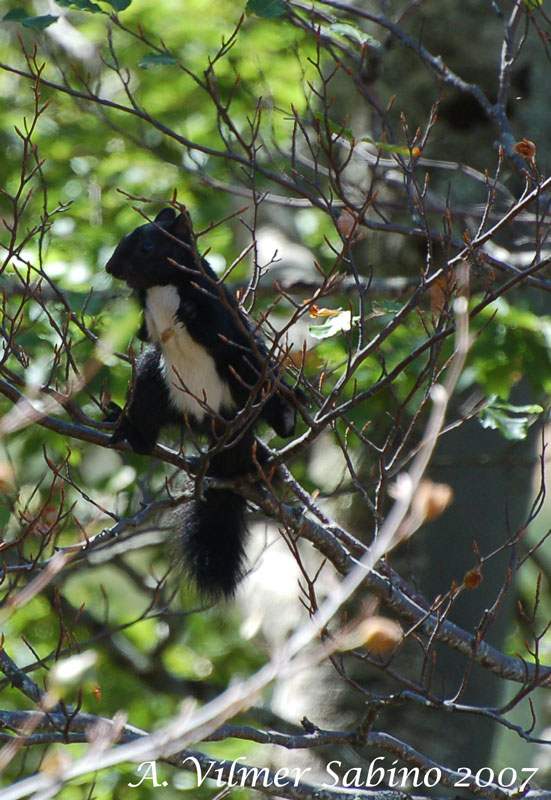
The only animal I saw was a red squirrel (Sciurus vulgaris) who was also a bit camera shy. I noticed him in roughly the same place on several occasions, but again, when I went out with my camera he refused to co-operate.


Red squirrels are still holding their own in many parts of Italy, though in some areas the greys are fast wiping them out. Despite their name, their coat colour can vary, including a variety found in the south of Italy (sciurus vulgaris meridionale) which is completely black. This one had a dark brown coat and the characteristic white belly.

Although I've been in the area many times before (my husband was born nearby and likes to go back to see relatives and old haunts), it was the first time we'd been to Eraclea Mare. I chose it because it seemed less developed and "touristy" than other places along the coast, and we were well rewarded. It was a super holiday and I know we shall go back. If you're in the area, I recommend it.


Explore some more...

For information on the danger posed to the red squirrel population by the greys : The European Squirrel Initiative

Related Posts with Thumbnails